
Last updated September 22, 2026
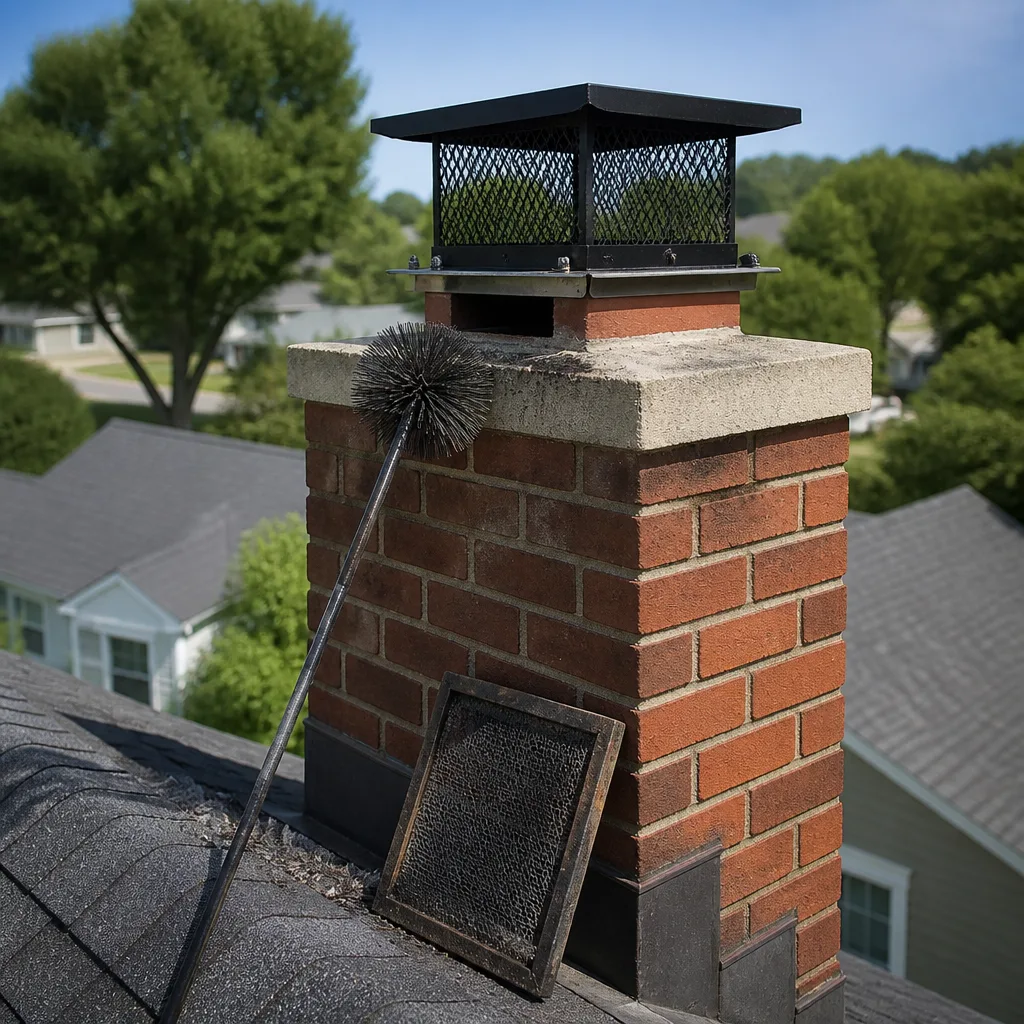
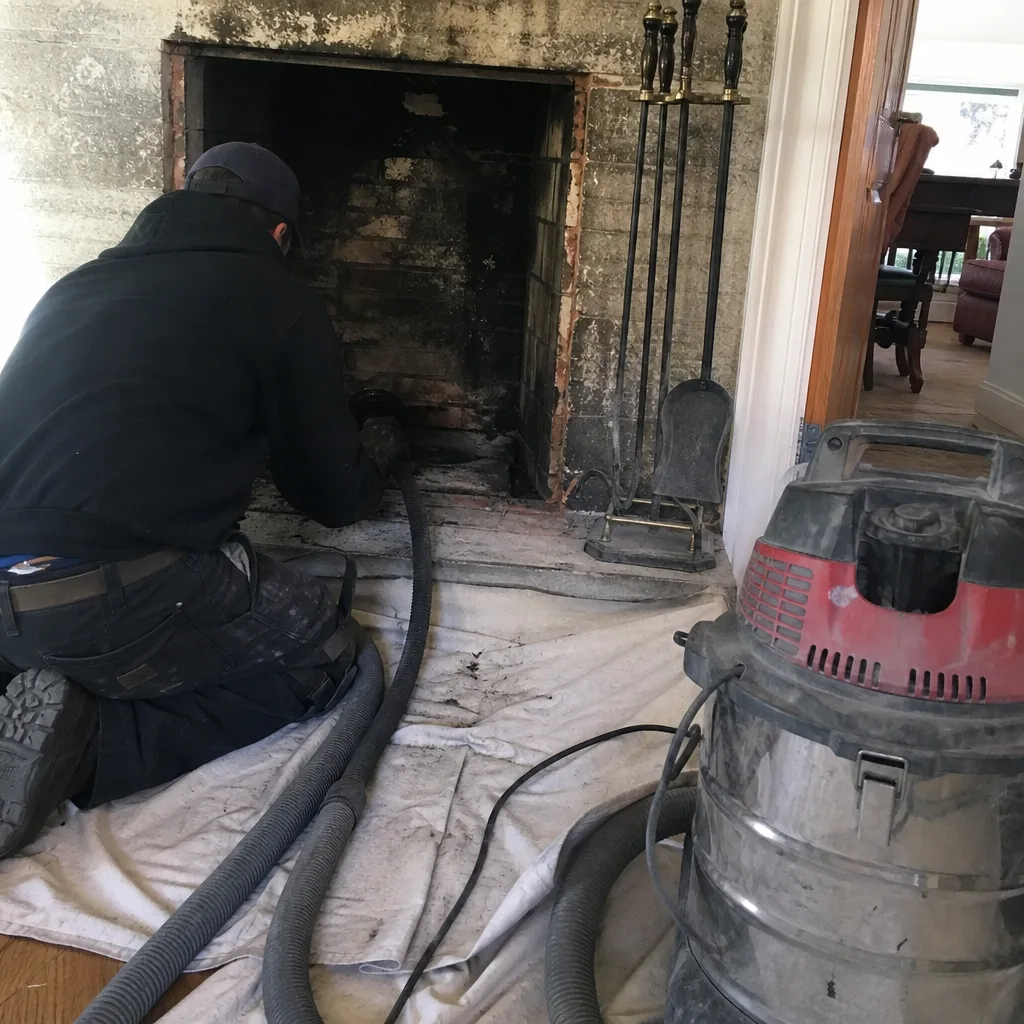
Level 1 sweep and inspection to the NFPA 211 annual standard - flue, crown, cap, and flashing checked and photographed
Chimney sweep logs do not sweep chimneys. They loosen some creosote - which then falls where a brush and vacuum still have to collect it.
 Before
 After
After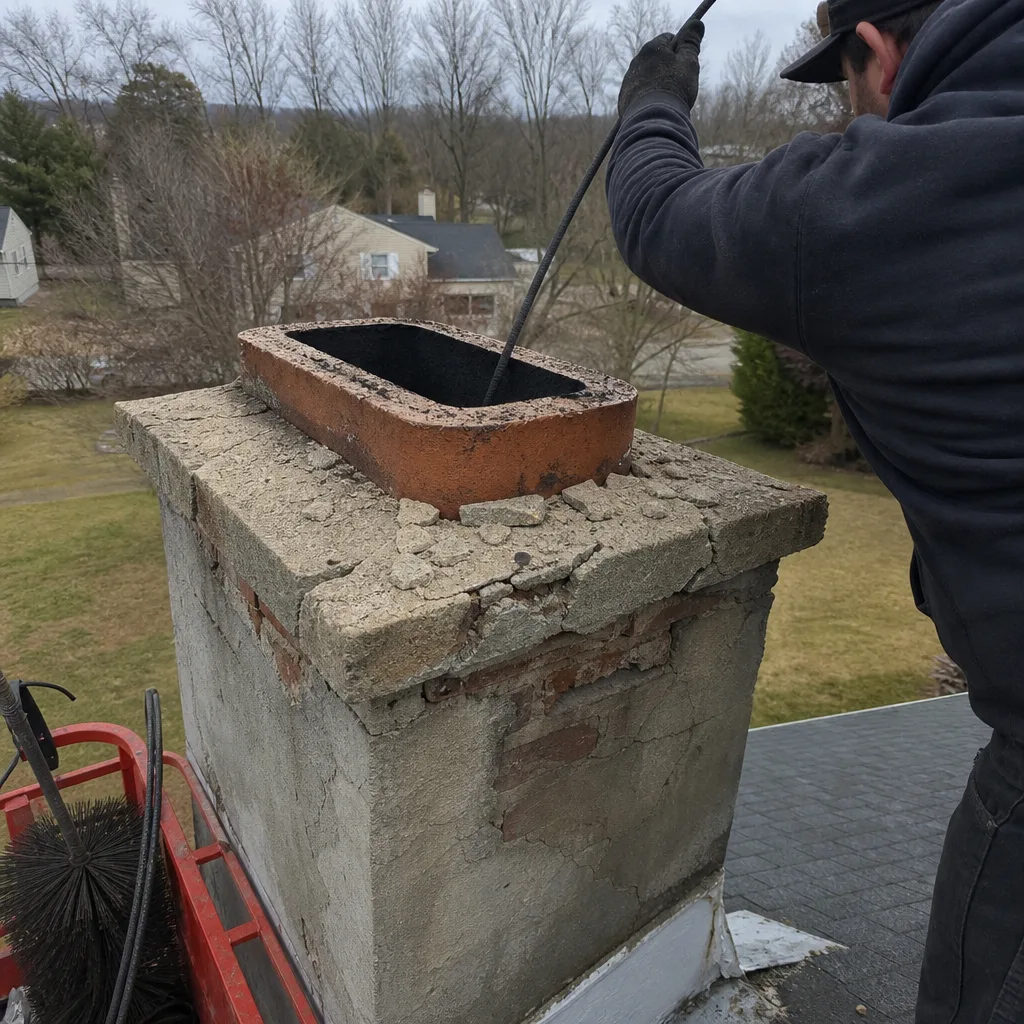 Before
 After
After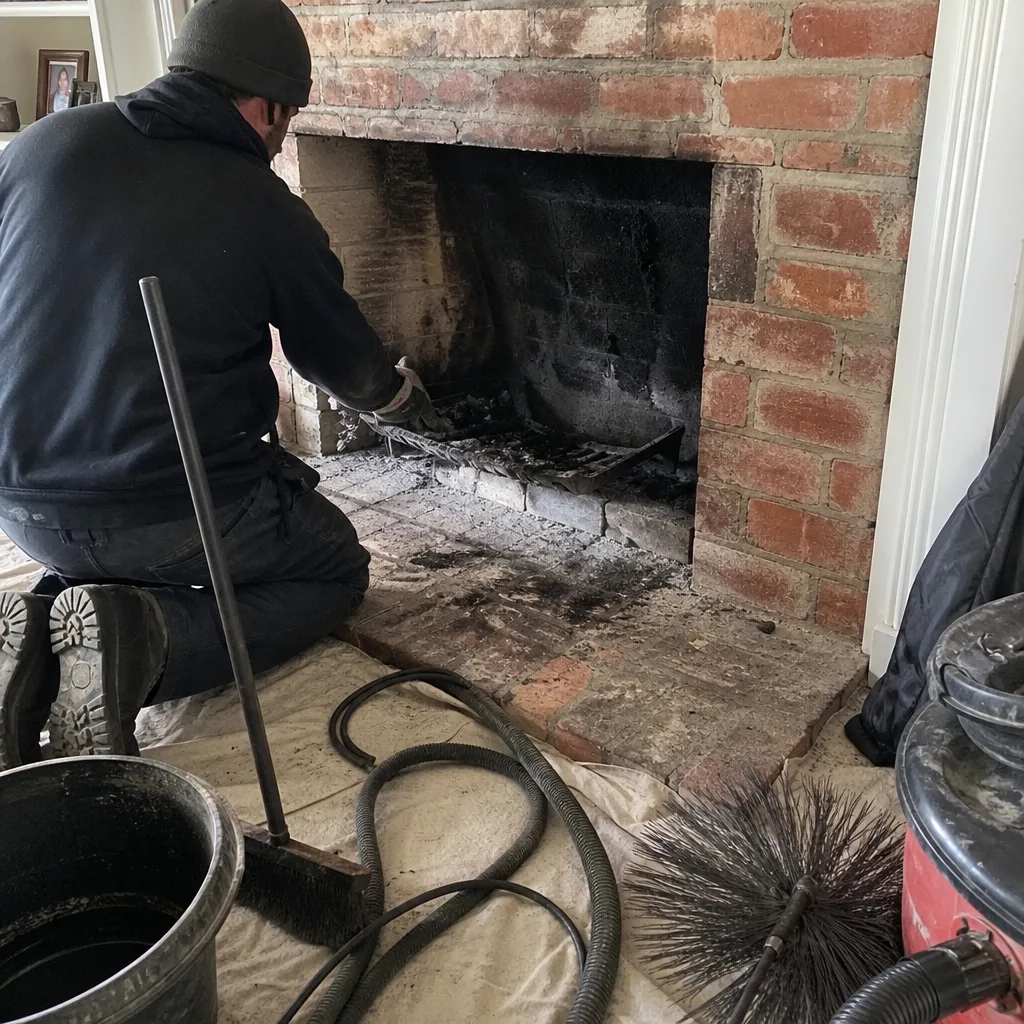 Before
 After
AfterSeasonal Chimney Cleaning Care for Lansdale: Year-Round Homeowner’s Guide
Most Lansdale homeowners book their chimney sweep between Labor Day and Halloween, then forget about it until the next September. That pattern works fine for a gas log set used twice a month. But for anyone burning more than two cords of hardwood through a Montgomery County winter, or running a pre-1970 unlined masonry fireplace, or dealing with the humidity swings that hit our ridge-and-valley topography from March through November, the “once a year in fall” rule is incomplete advice that can leave glazed creosote, cracked crowns, and deteriorating mortar unaddressed for months. Spring is actually the most useful season for Lansdale chimney work, and it’s the one almost nobody uses.
Quick Answer
Seasonal chimney care in Lansdale means matching the task to the season: spring for post-winter damage assessment and dry flue cleaning, summer for masonry repairs and gas appliance liner checks, fall for pre-burn sweep and camera inspection, and winter for mid-season creosote monitoring if you burn heavily. Homes built before 1970, units burning more than two cords annually, or gas inserts with older liners need this rotating schedule; lighter-use, post-1990 systems can often stay on a single annual fall cycle.
Table of Contents
- Why Spring Is the Most Undervalued Chimney Season in Lansdale
- Summer: Masonry Repairs, Cap Work, and Gas Liner Condensate
- Fall Pre-Season: Sweep, Scan, and Set Your Baseline
- Winter Mid-Season: When Heavy Burners Need a Check
- How Lansdale’s Shoulder Seasons Create Stage-2 Creosote
- Freeze-Thaw Timing in Montgomery County
- Common Mistakes to Avoid
- When to Call a Professional
- Frequently Asked Questions
 Before
 After
AfterWhy Spring Is the Most Undervalued Chimney Season in Lansdale
April and May in Lansdale deliver something no other season can: a dry, cooling flue with winter’s damage still fresh and visible. By June, summer humidity begins rehydrating creosote residue, making it harder to remove cleanly. By September, every sweep in Montgomery County is booked three weeks out.
Here’s what belongs on a Chimney Cleaning & Sweep Maintenance Checklist for Lansdale Homeowners:
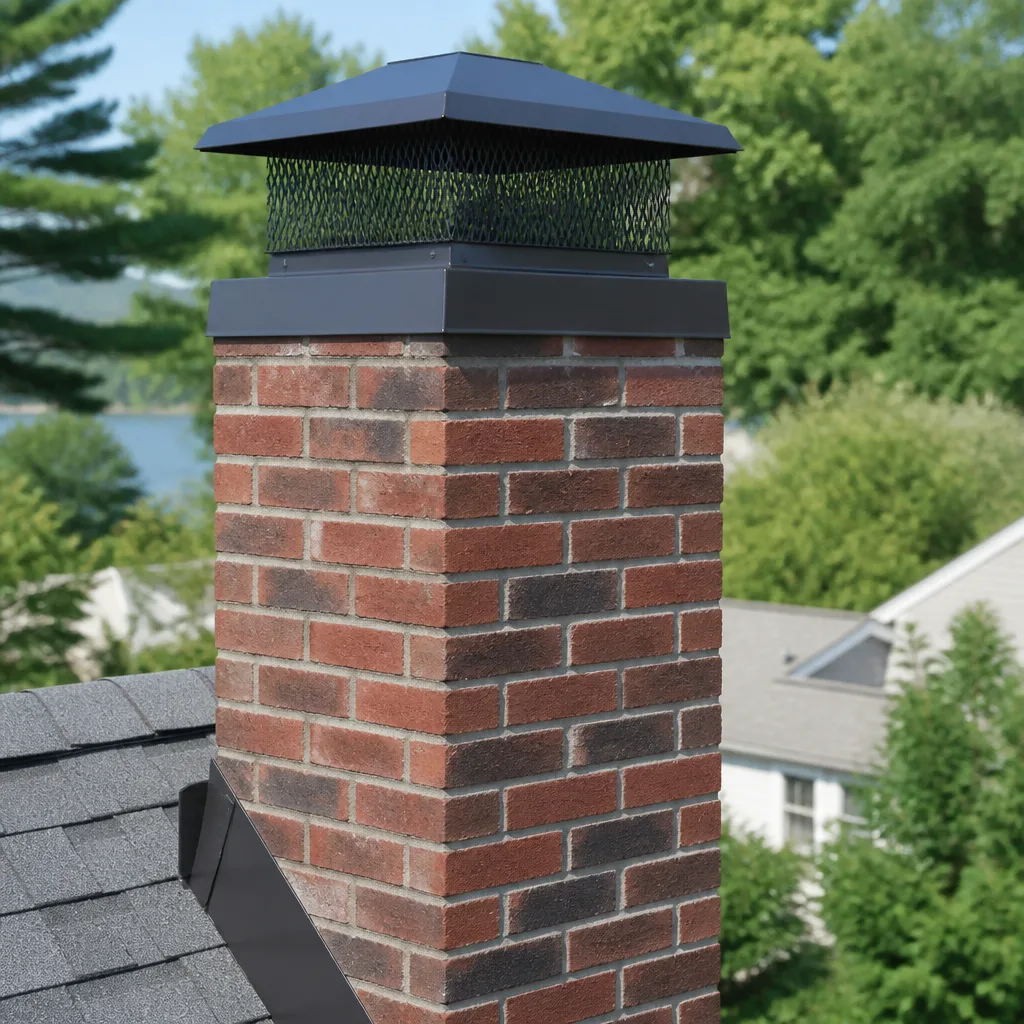
- Post-season Level 2 inspection with camera scan. The flue has just endured its heaviest use. Cracks, spalling (surface flaking of brick or clay tile), and liner gaps are easiest to spot before moisture and summer pollen obscure them. We document everything under Haven Standard Clause 4, the photo-record requirement we’ve followed since 2009.
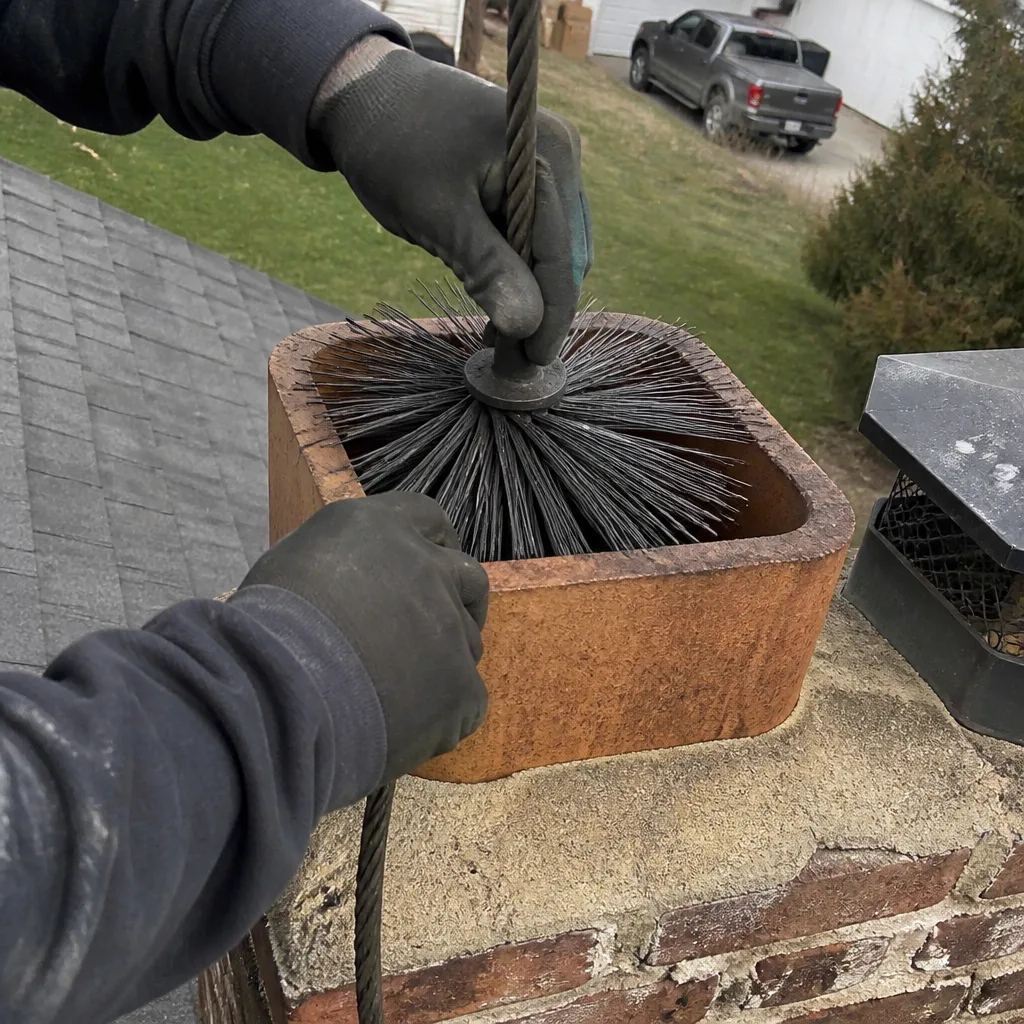
- Dry mechanical cleaning of the flue. Class I and II creosote, the powdery and tar-like stages common after a normal Lansdale winter, brush out cleanly when the flue is dry. Wait until humid July, and that same residue absorbs moisture, hardens, and requires more aggressive removal methods.
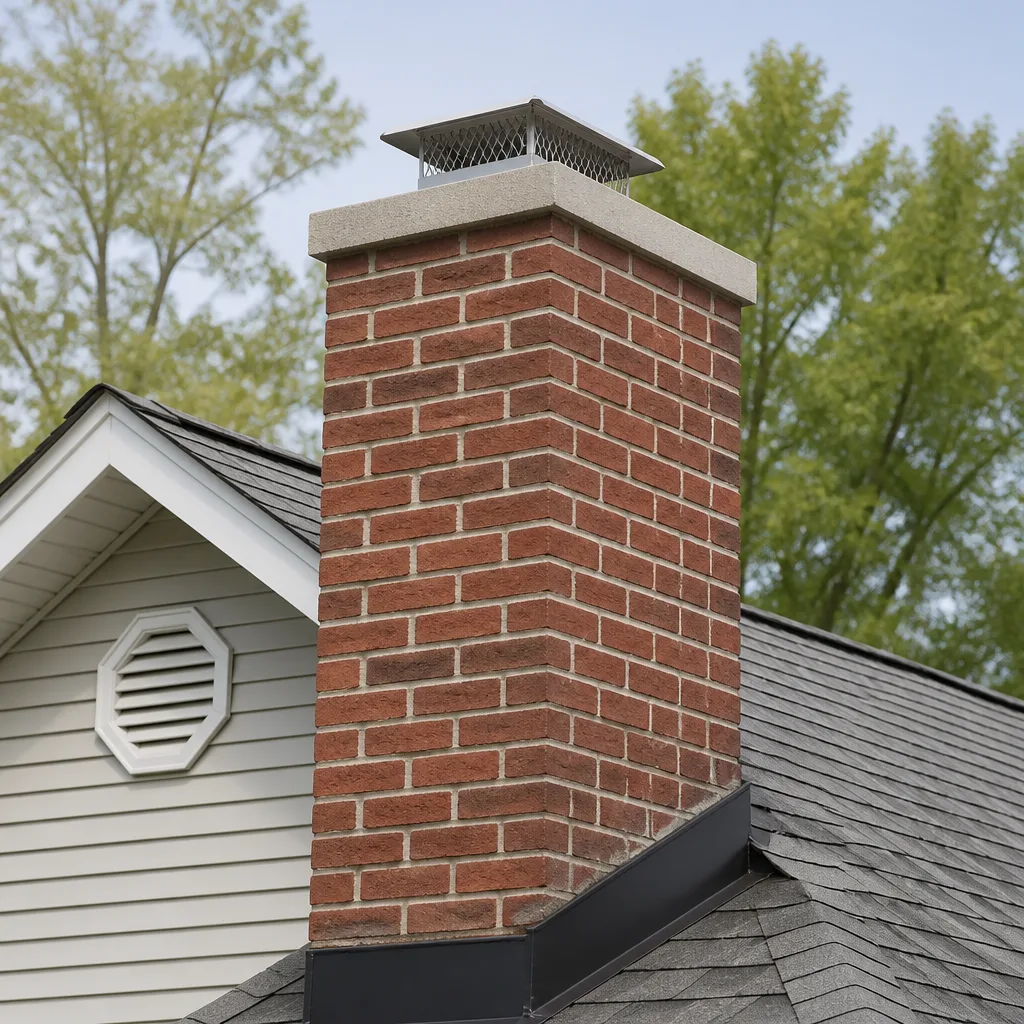
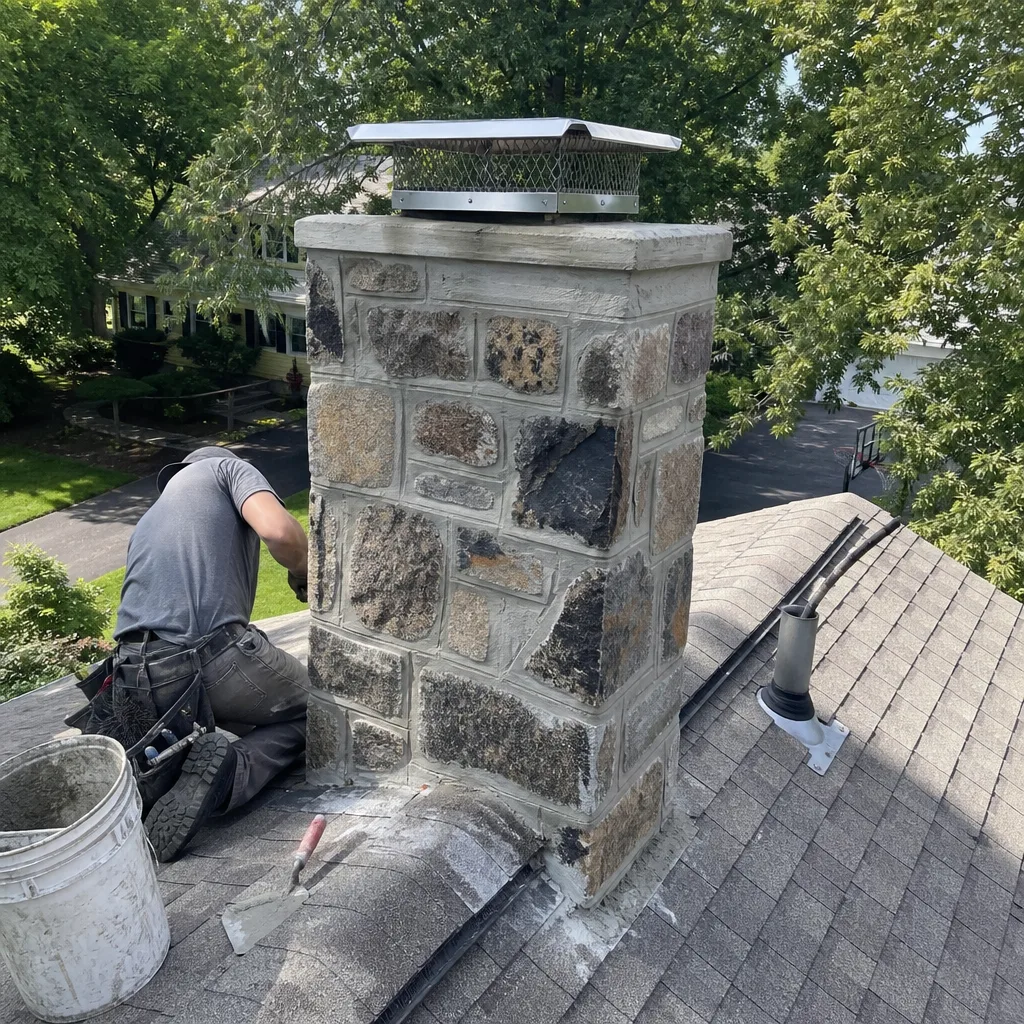
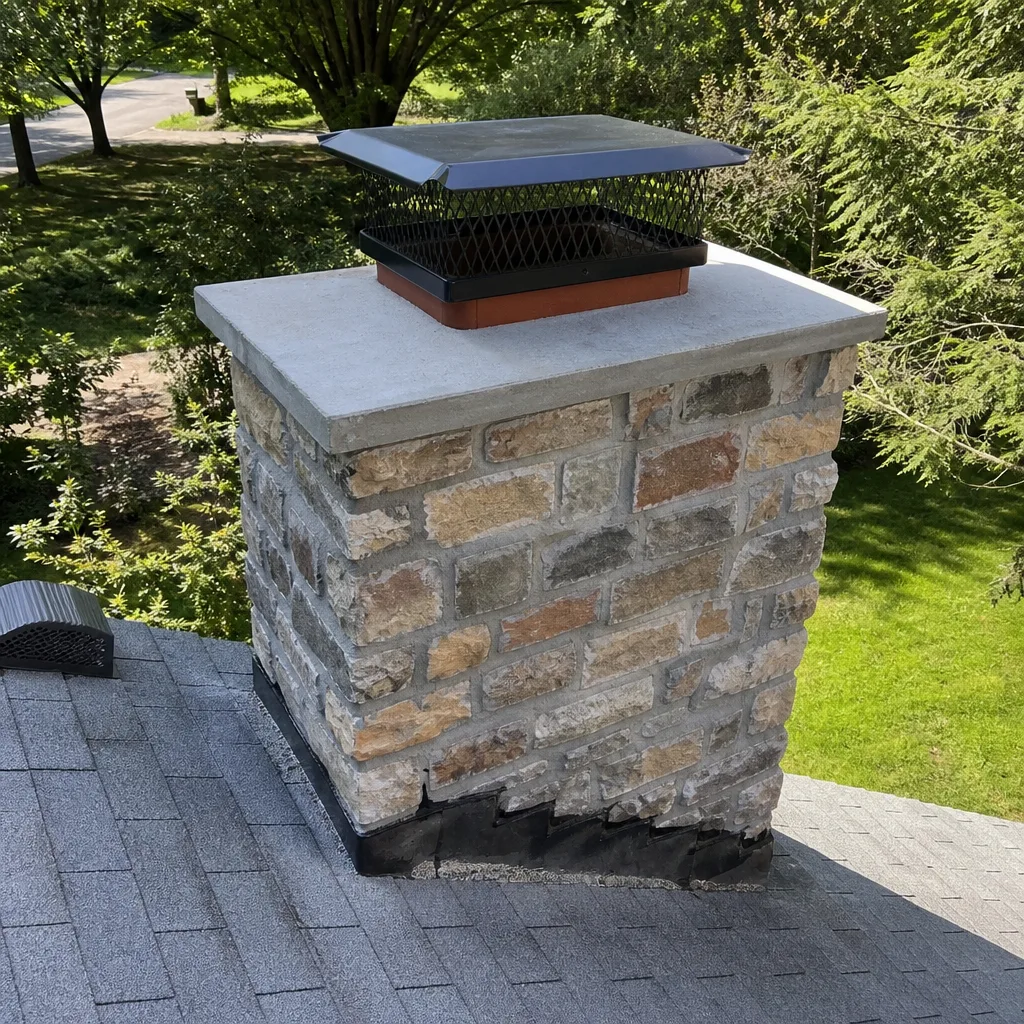
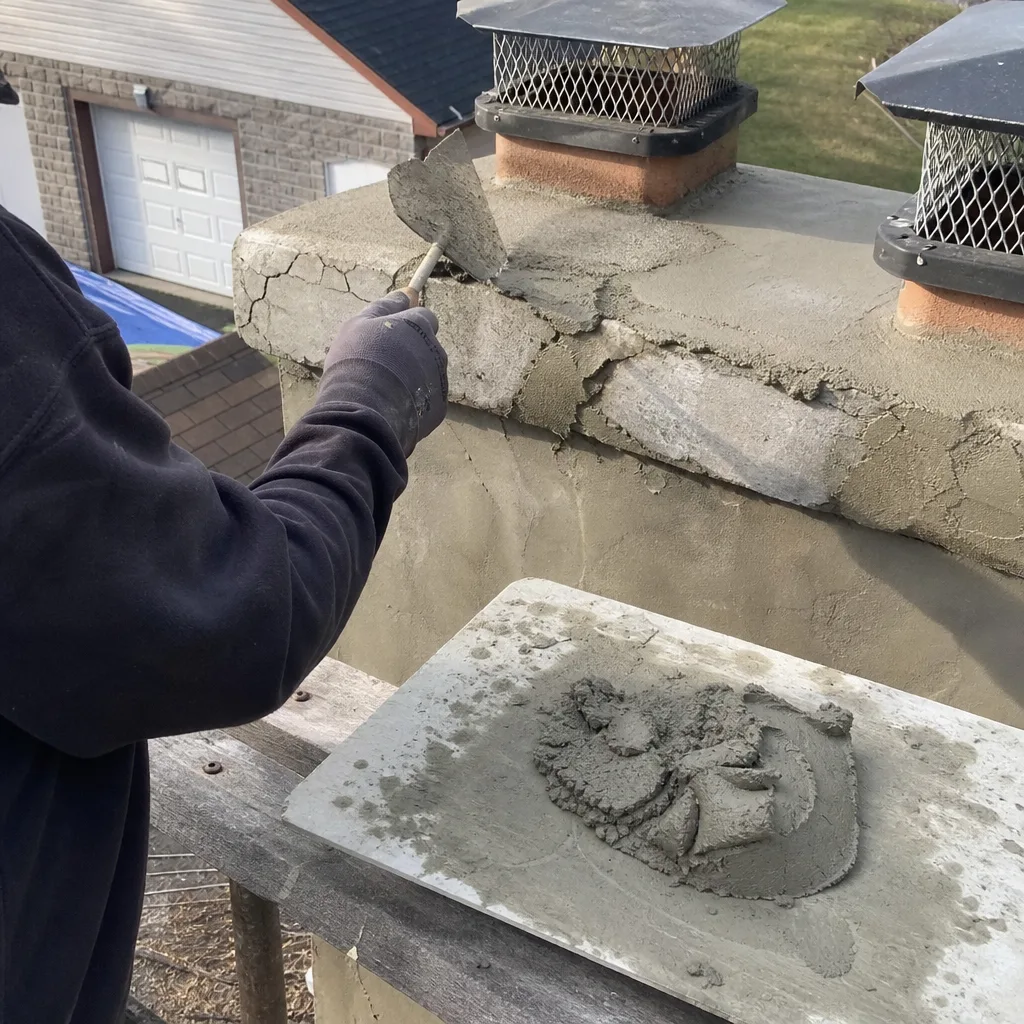
- Crown and cap assessment. Winter ice and the salt mist from I-476 and Route 309 accelerate concrete crown deterioration. Spring sealing with a flexible crown coat, or full crown rebuild if cracking has penetrated to the flue edge, prevents the water intrusion that destroys fireboxes over summer.
- Smoke chamber parging evaluation. The smoke chamber, the area above the firebox that funnels smoke into the flue, often shows heat stress cracking after heavy winter use. Spring is the right window for HeatShield chamber sealant application if needed.
- Schedule summer masonry repairs. If tuckpointing (grinding out and repacking deteriorated mortar joints) or brick replacement is needed, booking in spring puts you on the calendar before the fall rush. In our experience, Lansdale homeowners who book masonry work in April or May typically see completion by mid-July. Those who call in September often wait until November.
The neighborhoods along Valley Forge Road and in the North Penn School District corridor, where many homes date to the 1950s-1970s, show disproportionate spring damage from freeze-thaw cycling. We’ve found that post-winter inspection in these areas reveals mortar joint deterioration at roughly twice the rate of newer construction in Montgomery Township.
Summer: Masonry Repairs, Cap Work, and Gas Liner Condensate
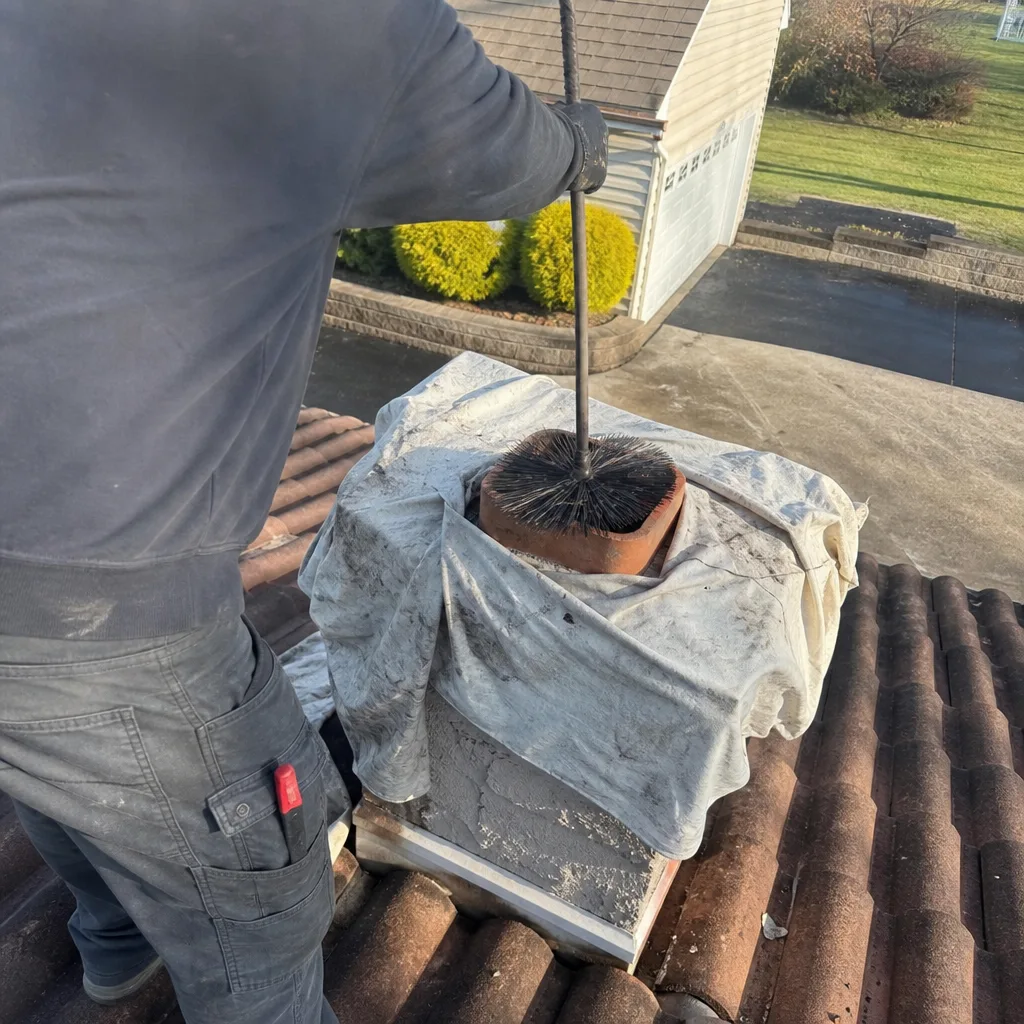
Summer chimney work in Lansdale splits into two tracks: wood-burning system repairs and gas appliance maintenance. Each has distinct timing.
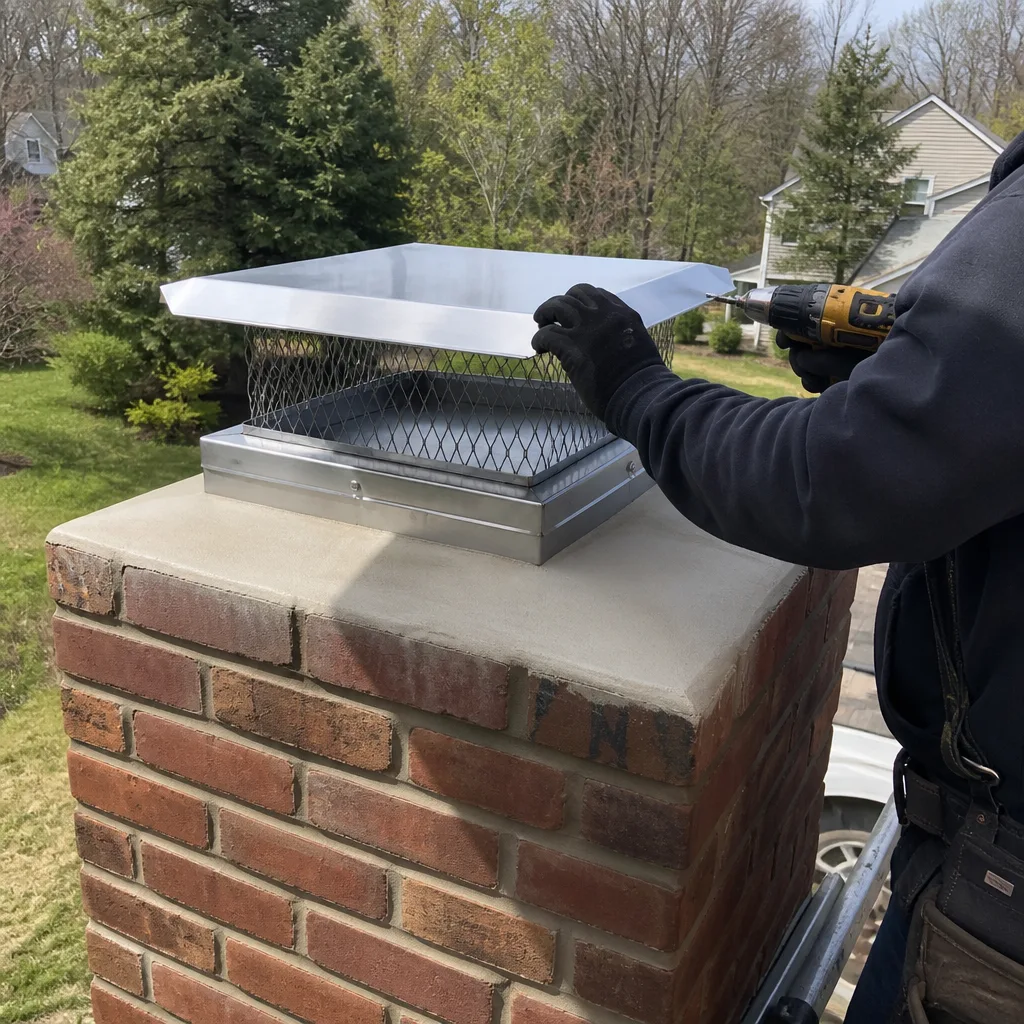
For wood-burning systems: June through August is masonry repair season. Mortar cures best in temperatures between 50°F and 80°F with low precipitation, which describes most Lansdale summer mornings before the afternoon thunderstorms that roll off the ridge near the Lansdale interchange. Tuckpointing, crown rebuilds, and chimney cap replacement all need dry conditions for proper curing.
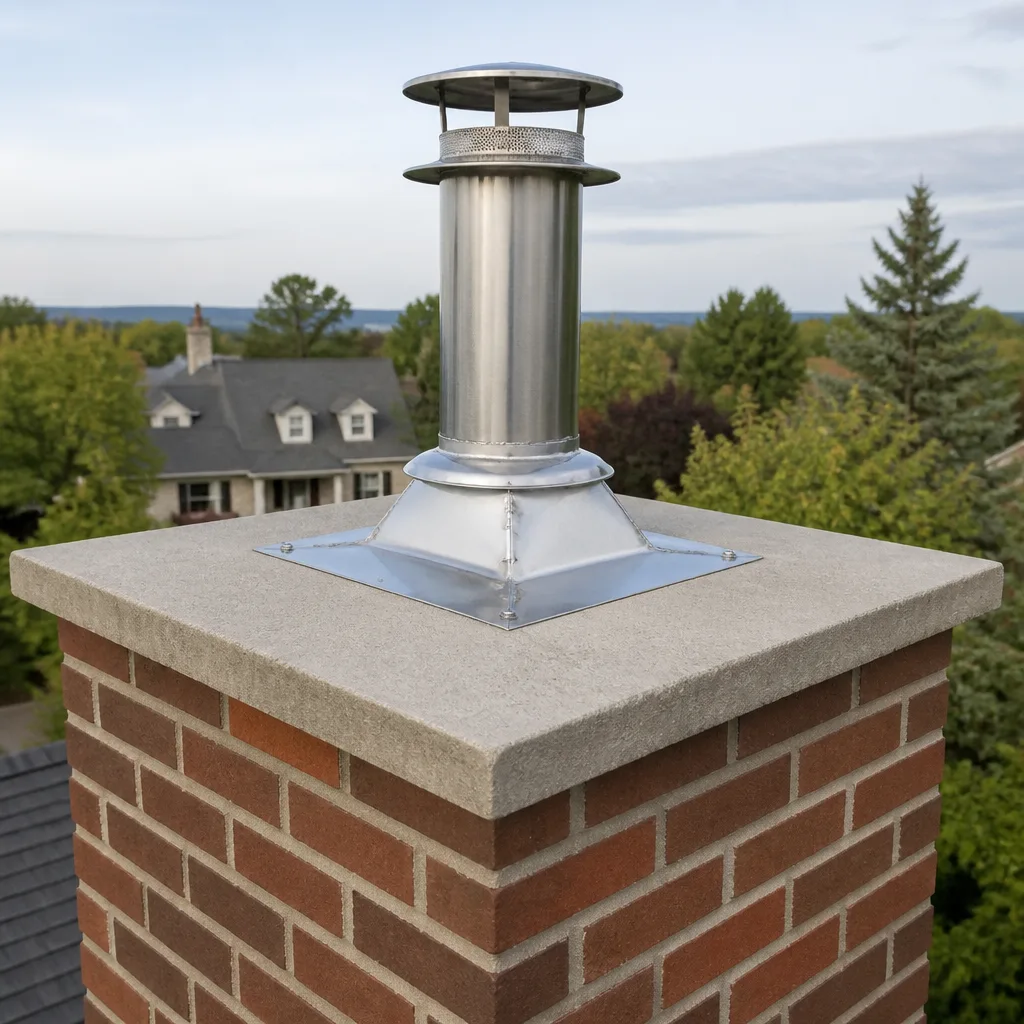
We source cap and flashing materials through our Haven buying network, primarily from Gelco and Copperfield, to keep replacement costs predictable. A standard stainless cap with mesh sides runs $280-$450 installed in the Lansdale market, depending on flue count and whether the existing flue tiles need trimming. Custom caps for oversized or multiple-flue chimneys, common in the larger Colonials along Walnut Street and Towamencin Avenue, range $520-$780.
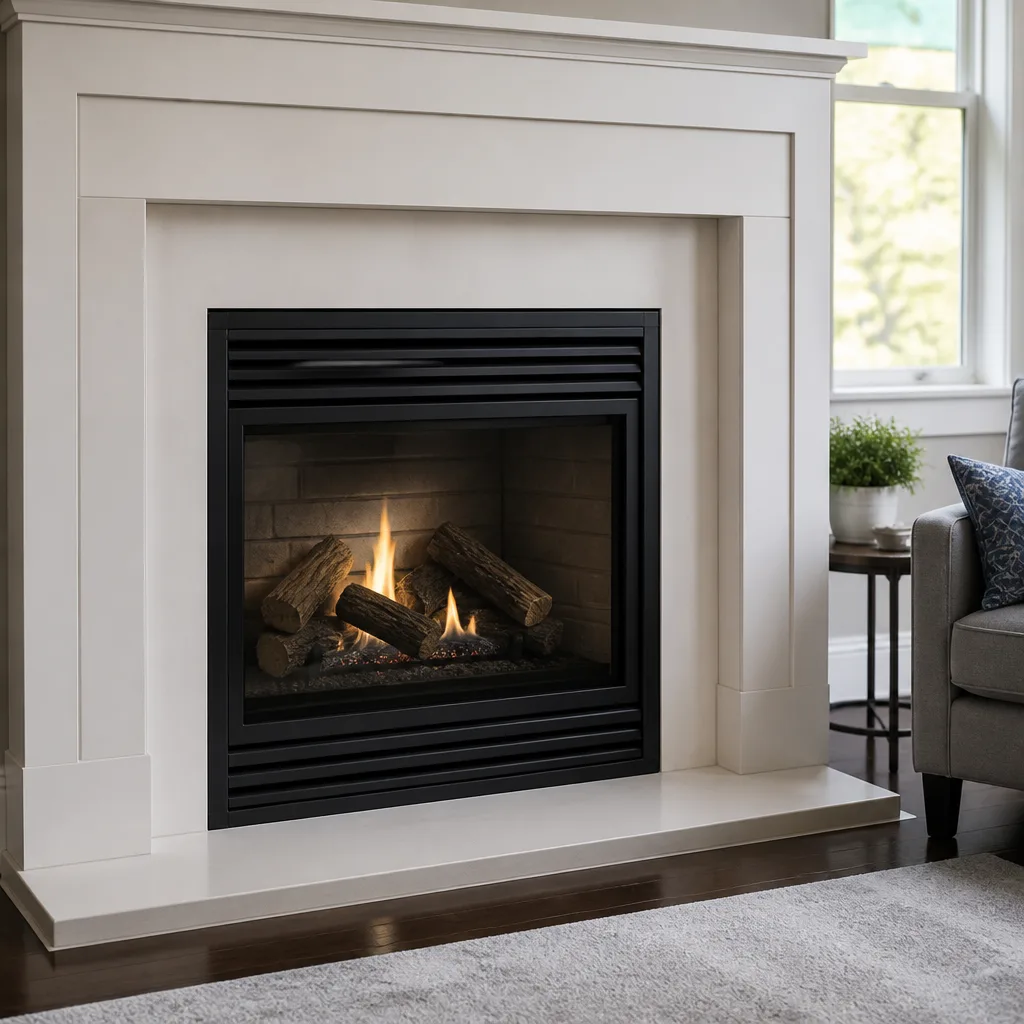
For gas fireplaces and inserts: Summer is when we catch the problem that confuses half the homeowners who call us in October: liner condensate that looks like a roof leak but isn’t.
Gas appliances produce water vapor as a primary combustion byproduct. In summer, when the surrounding masonry is warm and humid, that vapor condenses inside the liner instead of exiting the cap. The result is rust staining on the firebox, mineral deposits on the glass, and sometimes water pooling in the cleanout. Homeowners in Lansdale’s older split-levels, where gas inserts were retrofitted into original wood-burning fireplaces in the 1990s, see this frequently.
A summer inspection identifies whether the condensate is normal seasonal behavior or a sign of liner failure, incorrect vent sizing, or a missing or damaged termination cap. If the liner is damaged, we can schedule replacement with a DuraFlex or Olympia Chimney stainless liner before fall demand peaks.
Fall Pre-Season: Sweep, Scan, and Set Your Baseline
Fall is when most Lansdale homeowners think about their chimney, and for good reason. But the goal shouldn’t be just “get it cleaned before the first fire.” The goal is to establish a documented baseline that every future inspection can be measured against.
Here’s how a proper fall pre-season visit should work:
- Written scope and price before anyone enters your home. Haven Standard Clause 1 requires it. You’ll know exactly what the sweep includes, what the camera inspection covers, and what any recommended repairs would cost before work starts.
- NFPA 211 Level 2 inspection with camera scan down the flue. This is not a flashlight look from the firebox. The camera documents liner condition, creosote class and thickness, joint gaps, and any obstructions. In Lansdale, we regularly find bird nests in uncapped flues, deteriorated clay tile in pre-1960 homes near the borough center, and improper connector pipe installations in newer construction where the builder subbed out fireplace work to the lowest bidder.
- Mechanical sweep appropriate to creosote stage. Class I (sooty) and Class II (tar-like, but still brushable) creosote come out with rotary chains or poly brushes. Class III (glazed, hardened) requires more aggressive methods and indicates a combustion or wood-moisture problem that needs addressing.
- Photo record delivered with the report. Haven Standard Clause 4 again. You get dated images of the flue interior, the firebox, the damper assembly, and the exterior crown and cap. When you call us in three years, we pull the same images and compare.
- Written recommendation with priority ranking. Not everything needs immediate repair. We flag what must be done before first use, what should be scheduled within the year, and what can be monitored. No scare tactics. If your liner shows minor spalling but intact structure, we say so plainly.
Fall pricing in Lansdale for a complete Level 2 inspection with sweep and documentation-detailed in our Chimney Cleaning Cost Breakdown: The Lansdale Homeowner’s Reference for 2026-runs $285-$395 for a single-flue system, $420-$580 for multi-flue or insert configurations. This includes the camera scan and photo record; we do not offer a cheaper “sweep only” option without documentation, because the documentation is the point.
Booking timeline: in a typical Lansdale autumn, our schedule fills by mid-September for October slots. Homeowners in the Towamencin and Hatfield areas, where we see heavier wood-burning rates, often book in August. The documented baseline you establish in fall becomes the reference point for your spring inspection, creating a year-over-year record that catches deterioration early.
Winter Mid-Season: When Heavy Burners Need a Check
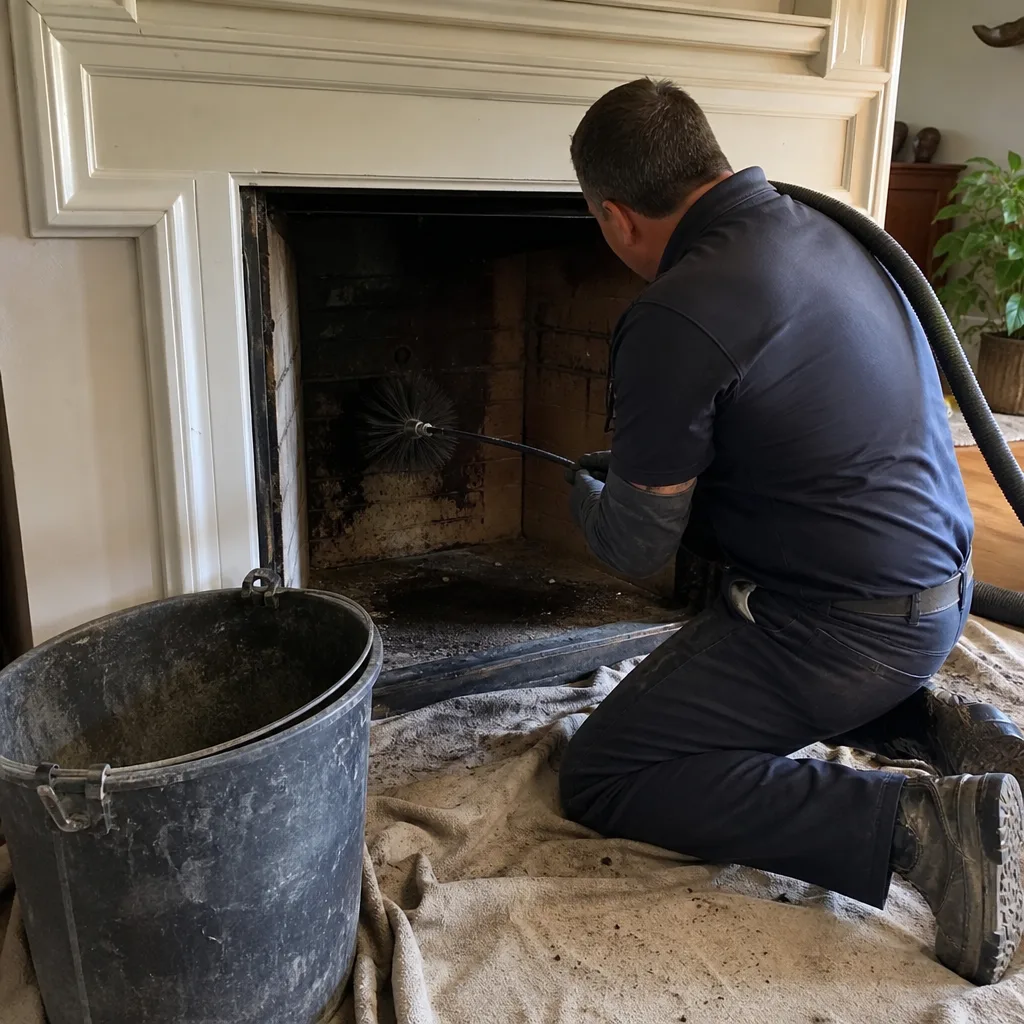
The standard annual sweep assumes moderate use: a cord or two of seasoned hardwood, fires on weekends and holidays. Lansdale homeowners who heat primarily with wood, or who burn three or more cords through a typical winter, need a mid-season assessment.
Here’s the specific risk: creosote formation accelerates non-linearly. The first cord through a clean flue produces relatively light Class I residue. But as that layer builds, it insulates the flue, lowers surface temperature, and causes subsequent combustion gases to condense more readily. By cord three, you may have Class II tar-like buildup in the upper third of the flue where temperatures are lowest. If you’re burning unseasoned wood, or if your firebox is undersized for your heating load (common in the smaller ranch homes near the SEPTA line), that progression happens faster.
A mid-winter check, typically scheduled for late January or early February, includes:
- Visual assessment of the firebox and damper for creosote dripping or buildup
- Smoke chamber inspection for glazed deposits
- Exterior flue temperature reading (anomalously cool sections indicate internal buildup)
- Connector pipe and thimble check for corrosion or gaps
We do not perform full mechanical sweeps in single-digit temperatures, because the flue materials are thermally stressed and more susceptible to damage. If heavy buildup is found, we schedule a full sweep for the first week above freezing, typically mid-February in Lansdale’s climate pattern.
For gas appliances, winter checks are rarely needed unless you notice performance changes: delayed ignition, sooting on logs, or carbon monoxide detector alerts. Those symptoms warrant immediate inspection, not a scheduled seasonal check.
How Lansdale’s Shoulder Seasons Create Stage-2 Creosote
Lansdale’s location on the Atlantic coastal plain’s transition to the Piedmont creates distinctive shoulder-season burning patterns. October and March fires are common, but they’re different fires than January’s.
In deep winter, a firebox runs hot for hours, the flue stays warm, and combustion gases exit quickly. In October and March, homeowners often build smaller fires for shorter periods, then let the system cool completely overnight. The flue never reaches stable operating temperature. Combustion gases condense on cooler surfaces. The result is Stage-2 creosote: sticky, tar-like, and far more fuel for chimney fires than the powdery Stage-1 residue of efficient burns.
We’ve documented this pattern across thousands of Lansdale inspections. Homes with identical appliances and wood sources show markedly different creosote profiles based on burn patterns. The homeowner who builds a full fire every Saturday in January may have light Stage-1 residue. The homeowner who runs a “take the chill off” fire for two hours every evening in October often has heavy Stage-2 glazing by Thanksgiving.
The practical implication: if your burning pattern is shoulder-season heavy, your sweep timing should adjust. A fall sweep before the first October fire, followed by a spring sweep after the last March burn, may be more appropriate than a single annual cleaning. The camera documentation from each visit lets us track whether your pattern produces accelerated buildup and recommend schedule adjustments.
Freeze-Thaw Timing in Montgomery County
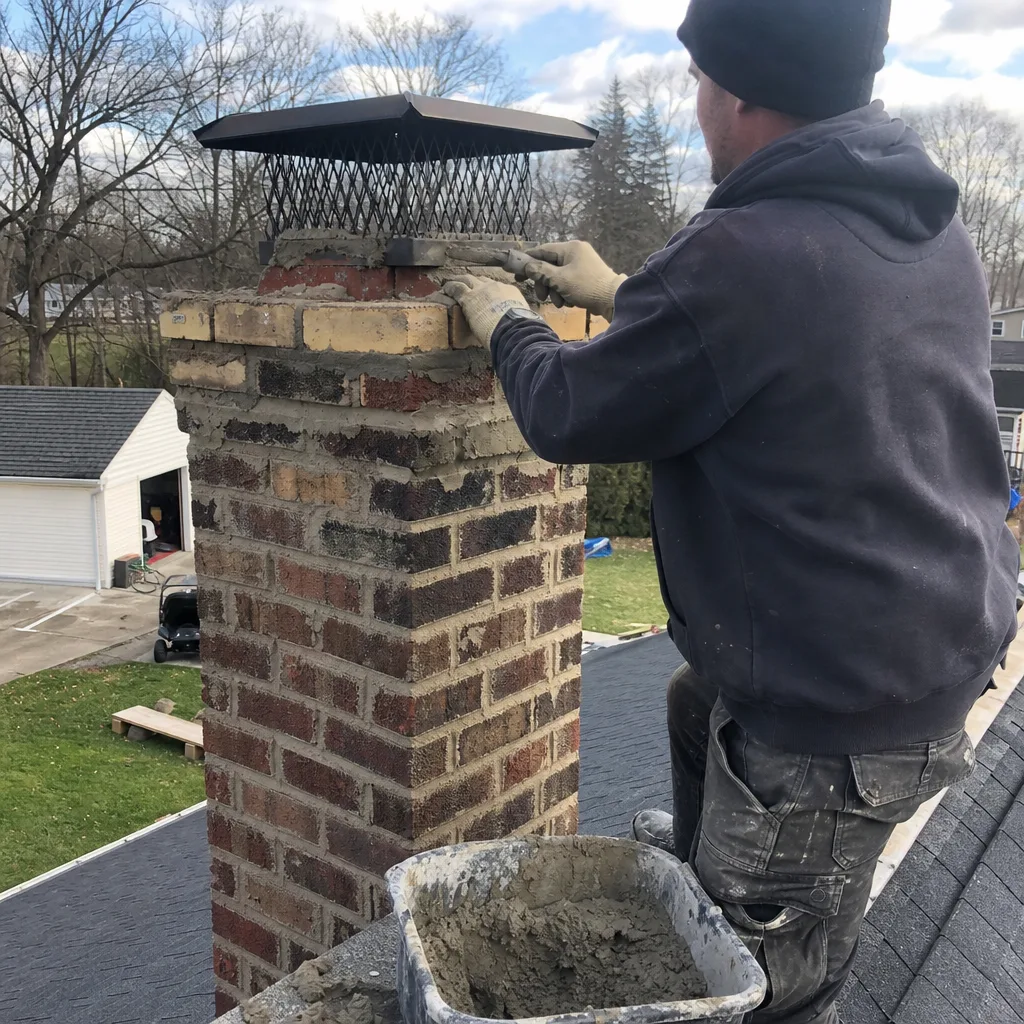
Montgomery County averages 22-28 freeze-thaw cycles annually, with the most damaging concentrated in late February through early April. Water enters micro-cracks in mortar and brick during thaw periods, then expands with 9% volumetric force when temperatures drop below 32°F again. Repeat twenty times, and sound mortar becomes crumbling powder.
The critical inspection window is the two to three weeks after the last hard freeze, typically mid-to-late March in Lansdale. At this point:
- All winter damage has occurred
- Materials have thawed and dried sufficiently for accurate assessment
- Repair scheduling allows completion before summer humidity complicates curing
- Pricing is at annual lows, before fall demand increases
We’ve found that mortar joint repointing booked in this window costs 15-25% less than identical work quoted in September, primarily because crews aren’t working overtime to meet pre-winter deadlines and material sourcing through our Haven network faces less competition.
The homes most vulnerable to freeze-thaw damage in Lansdale are pre-1940 masonry in the original borough grid, 1960s-1970s brick ranchers with minimal chimney overhang protection, and any structure where the crown has been deteriorating for more than two seasons without repair. The ridge-top exposure along Prospect Avenue and the elevation change near the Upper Gwynedd border create localized wind-driven rain and ice conditions that accelerate damage.
Common Mistakes to Avoid
- Waiting for fall to discover winter damage. By September, crown cracks have been leaking all summer, mortar joints have undergone a full freeze-thaw cycle, and every sweep in Lansdale is booked solid. Spring inspection catches problems when they’re smaller and cheaper.
- Assuming gas fireplaces need no seasonal attention. Gas appliances don’t produce creosote, but their liners corrode, their termination caps deteriorate, and summer condensate deposits minerals that obstruct flow. A biennial Level 2 inspection is minimum responsible maintenance.
- Burning “whatever’s cheap” in shoulder season. Unseasoned wood, construction scraps, or pallet wood burned in October’s cool flue produces Stage-2 creosote faster than any other practice we see in Lansdale. Moisture content above 25% is the single biggest controllable risk factor.
- Ignoring the smoke chamber. The smoke chamber is invisible to the homeowner and inaccessible to standard sweep brushes. Camera inspection is the only way to assess it, and chamber deterioration is a common hidden factor in poor draft and smoke spillage.
- Accepting “it looks fine from down here” as inspection. A flashlight look from the firebox reveals perhaps 15% of the flue’s interior surface. The NFPA 211 Level 2 standard exists specifically because surface inspection misses the damage that matters.
- Skipping documentation to save money. The photo record from your 2024 inspection is the only objective evidence of your system’s condition when you sell in 2029, or when you need to document maintenance for your insurer after a chimney fire. Haven Standard Clause 4 makes it standard, not optional, because we’ve seen too many disputes resolved by dated images.
- Treating all chimneys on the same schedule. A 1985 metal prefab with a gas insert and a 1920 unlined masonry fireplace serving a wood stove have nothing in common except the word “chimney.” Their maintenance schedules, inspection priorities, and risk profiles differ completely.
When to Call a Professional
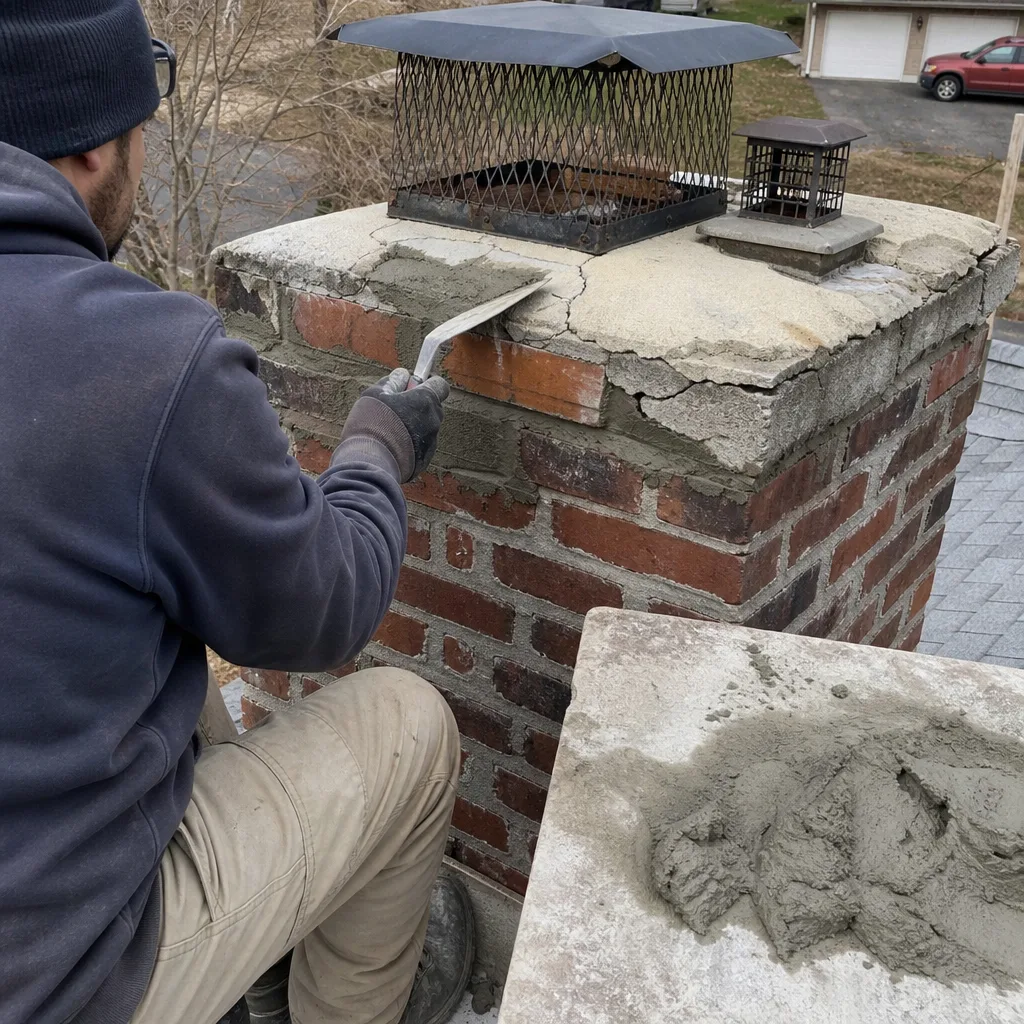
Call for inspection before the situation becomes urgent. Specific triggers: visible cracks in the firebox or exterior brick, white efflorescence staining (indicating water migration), rust flakes in the firebox, smoke odor when the system isn’t in use, or any carbon monoxide detector activation. For gas appliances, delayed ignition, sooting, or a persistent sulfur smell warrants immediate attention.
Level Two Chimney Lansdale offers free estimates throughout Lansdale and Montgomery County. Every estimate includes a written scope, written price, and written warranty before any work begins. Call (267) 327-4785 to schedule, or request a free second opinion on any competitor’s written quote.
Frequently Asked Questions
A complete NFPA 211 Level 2 chimney inspection with sweep, camera scan, and documented photo record in Lansdale costs $285-$395 for a single-flue system and $420-$580 for multi-flue or insert configurations. This includes the written price before work starts and the 365-Day Done Right Promise. Call (267) 327-4785 for an exact quote for your specific system.
For typical use (one to two cords of seasoned hardwood annually, weekend fires), a single annual sweep before the heating season is sufficient. Heavy burners (three or more cords), shoulder-season burners, or homes with pre-1970 unlined masonry should consider spring and fall service. Gas appliances need Level 2 inspection every two years minimum. The camera documentation from each visit establishes whether your pattern requires more frequent attention.
We recommend liner replacement only when camera inspection shows specific failure modes: cracked clay tiles with gaps visible to the masonry, stainless liners with perforation or seam separation, or unlined masonry with active spalling that exposes combustible framing. In every case, we show you the images, explain the code requirement (NFPA 211 mandates intact liners for solid fuel), and note when a condition can be monitored versus when it requires immediate action. No recommendation without visual evidence you can see yourself.
Skipped maintenance produces three cumulative risks: chimney fire from creosote ignition (most common in systems with Stage-2 or Stage-3 buildup), carbon monoxide intrusion from liner gaps or blockages, and structural deterioration from water intrusion through uncapped or cracked systems. The first two can be fatal; the third typically costs $3,000-$8,000 to remediate in Lansdale’s market when finally addressed. Regular inspection catches all three in preventable stages.
Summer odor from gas fireplaces usually indicates one of three conditions: normal dust burning off the pilot assembly when first lit after months of disuse, dead organic matter in an uncapped flue, or liner condensate producing a musty smell as it evaporates. Persistent sulfur or rotten-egg odor suggests a gas leak and requires immediate evacuation and utility contact. A summer inspection distinguishes harmless seasonal behavior from conditions needing repair.
Homeowners can and should monitor visible exterior conditions: crown integrity, cap presence, mortar joint color changes, and firebox brick condition. But flue interior assessment requires specialized camera equipment, ladder access to the roof, and training to distinguish normal wear from hazardous conditions. For the flue itself, professional inspection is the only reliable method. We offer free estimates and will show you exactly what we find.
The Bottom Line
Seasonal chimney care in Lansdale works best when matched to your system’s actual condition and use pattern, not a single calendar date, as we explain in our Chimney Cleaning Permits, Codes & Inspections in PA: What You Need to Know. Spring reveals winter damage while the flue is still dry and crews are available. Summer handles masonry repairs and gas appliance condensate issues. Fall establishes your documented baseline before the heating season. Winter monitors heavy-use systems for accelerated creosote. The “once a year in fall” rule is a starting point, not a universal prescription. Camera documentation from each visit, maintained under Haven Standard Clause 4 since 2009, turns guesswork into measurable condition tracking.
Level Two Chimney Lansdale has completed more than 38,000 chimney inspections and cleanings since 2009, every one with a written price before work started and a documented record when finished. We serve Lansdale, Towamencin, Hatfield, and surrounding Montgomery County communities with background-checked, uniformed technicians and 24/7 live phone support. Call (267) 327-4785 for a free estimate, or bring us any competitor’s written quote for a free second opinion, and explore more guides & resources on our blog.
Written by Corrine Halstead, Owner at Level Two Chimney Lansdale, serving Lansdale since 2009.