
Last updated September 22, 2026
Level 1 sweep and inspection to the NFPA 211 annual standard - flue, crown, cap, and flashing checked and photographed
Chimney sweep logs do not sweep chimneys. They loosen some creosote - which then falls where a brush and vacuum still have to collect it.
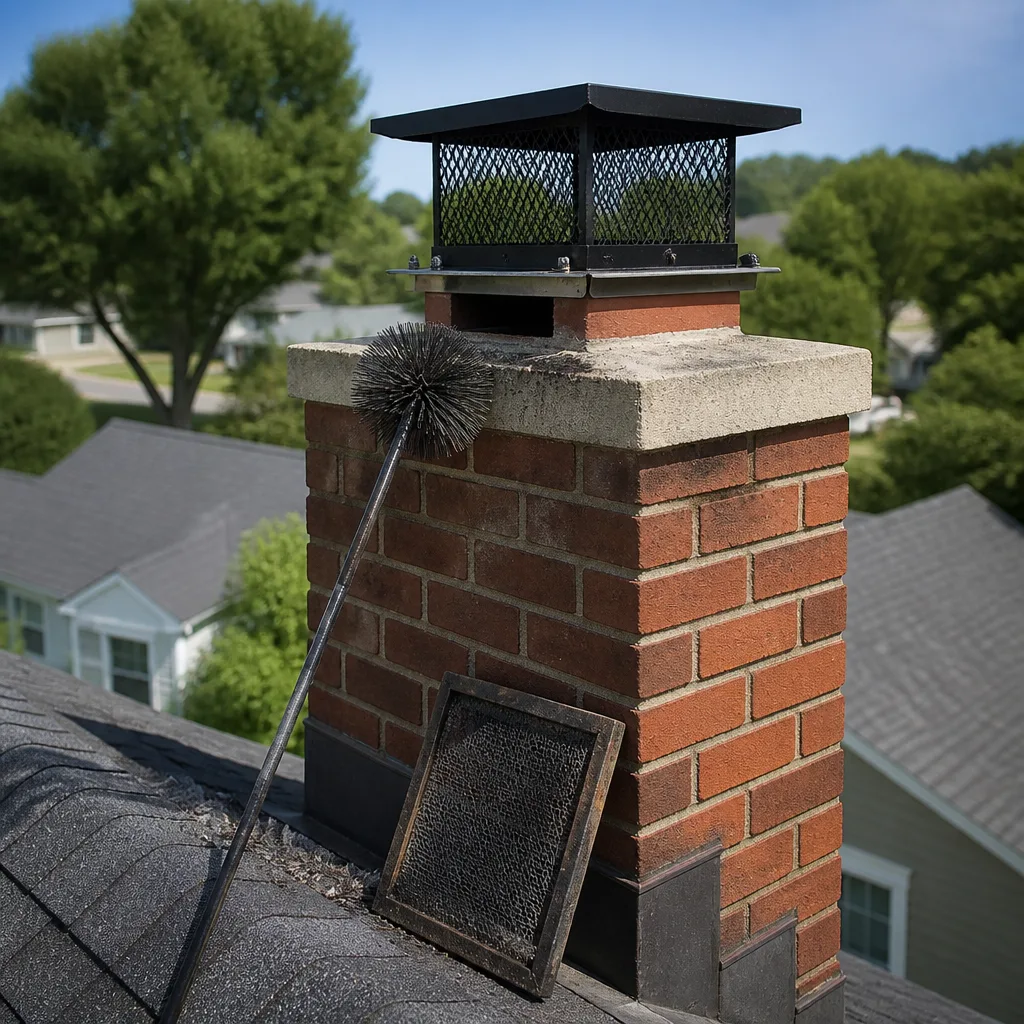
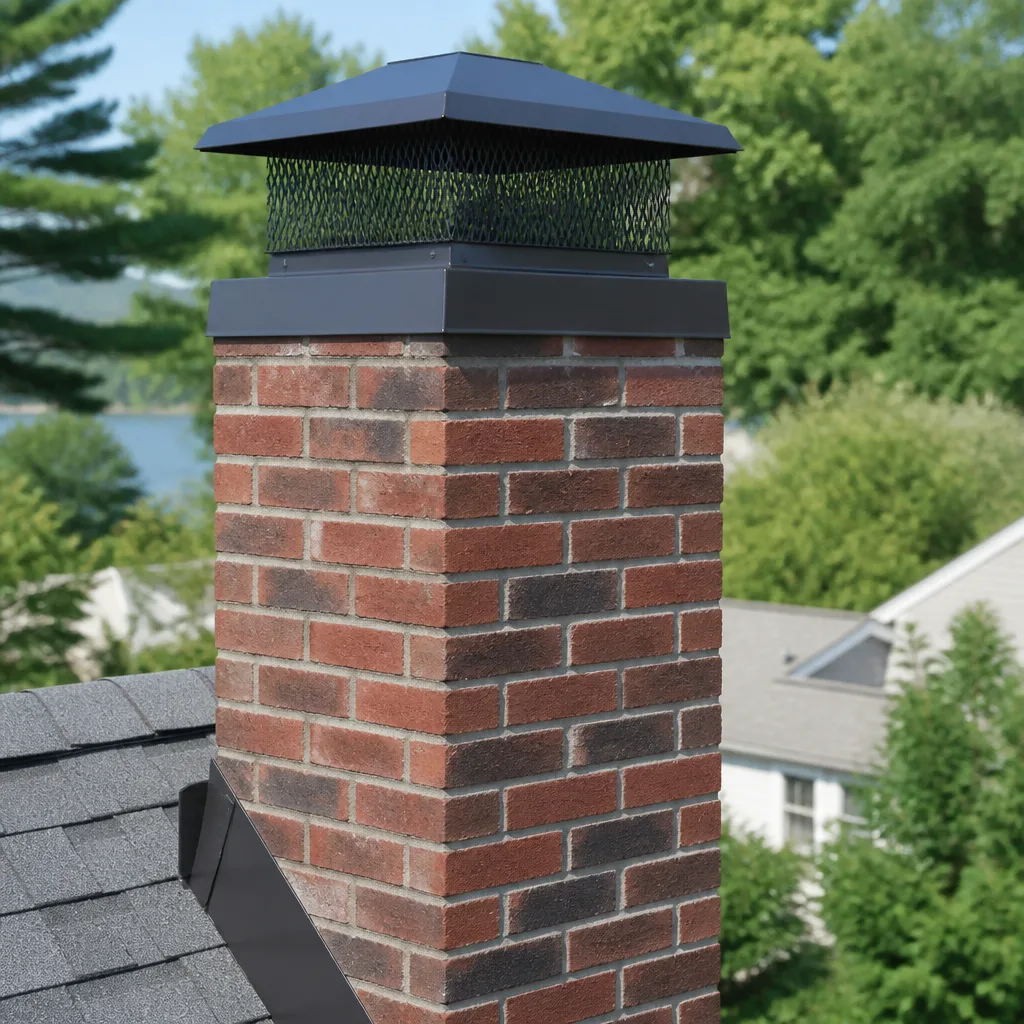
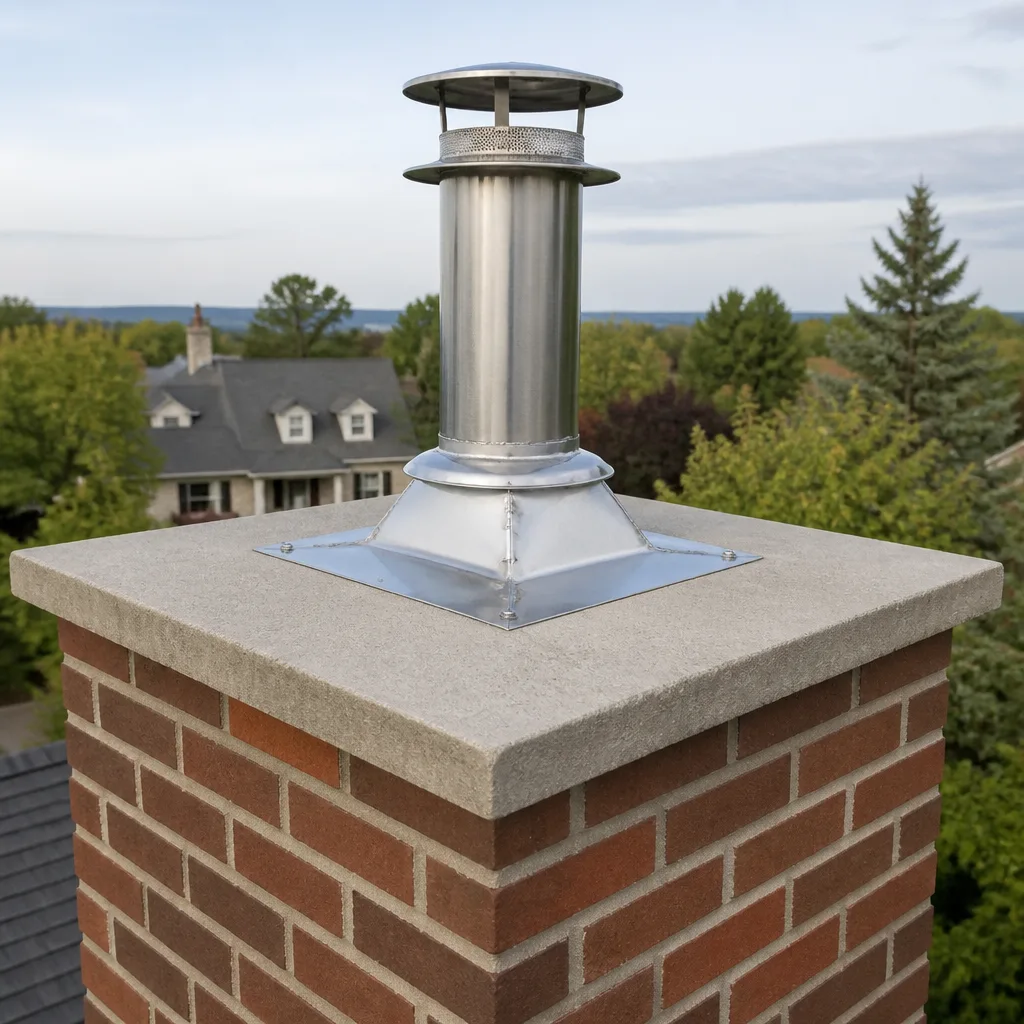
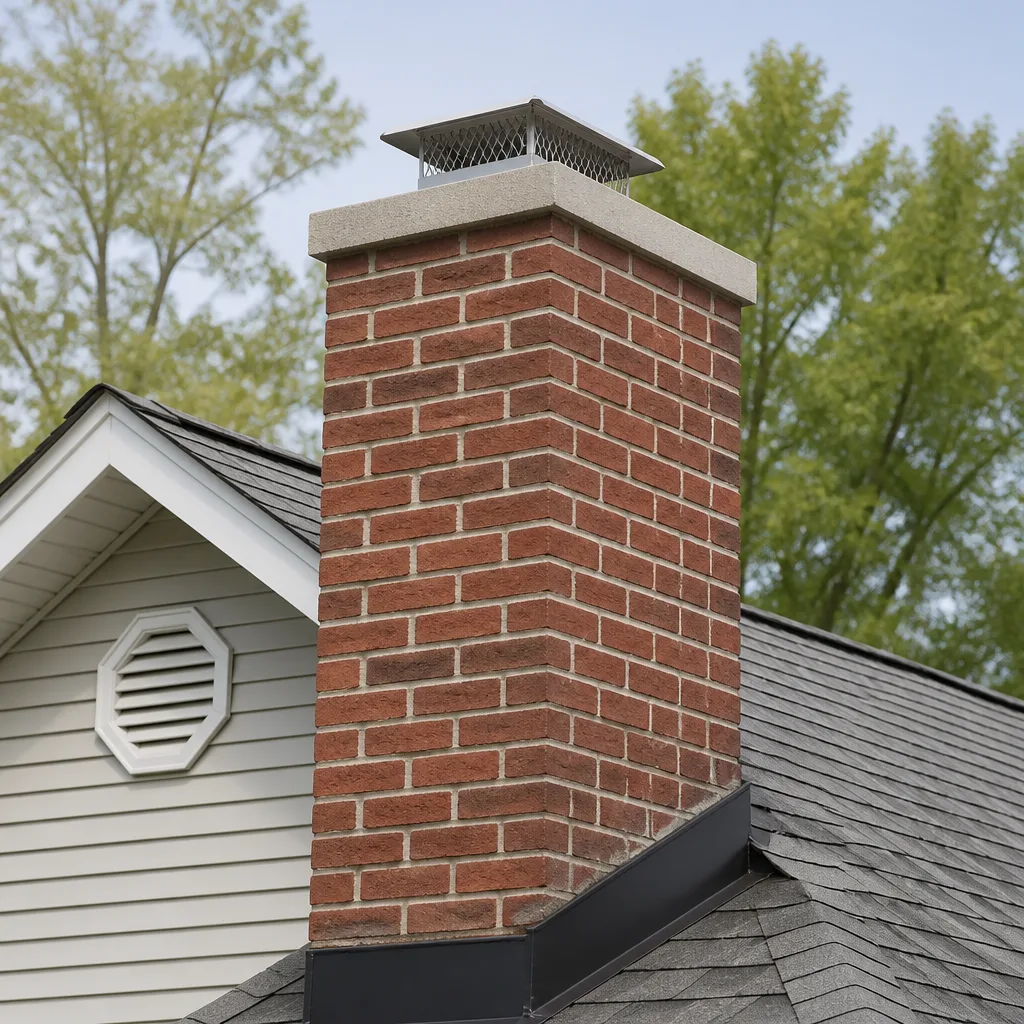
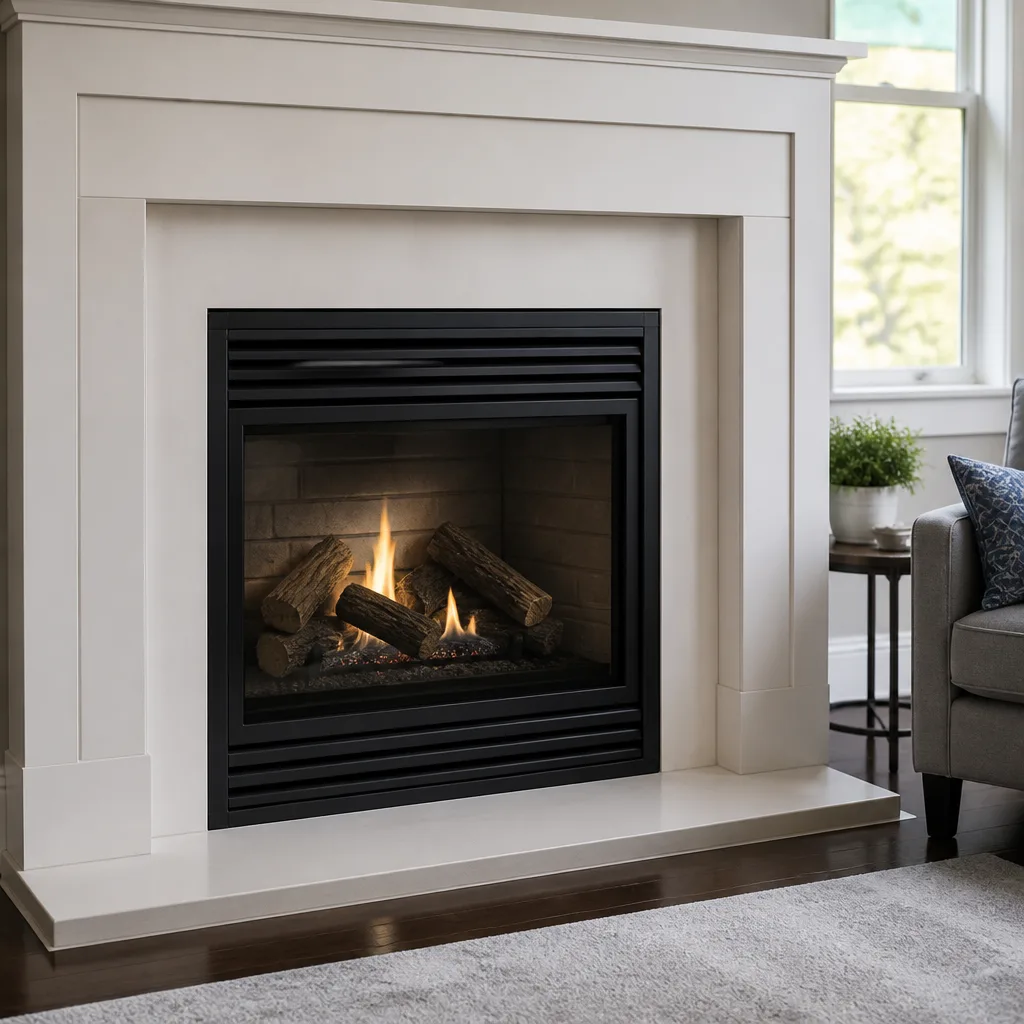
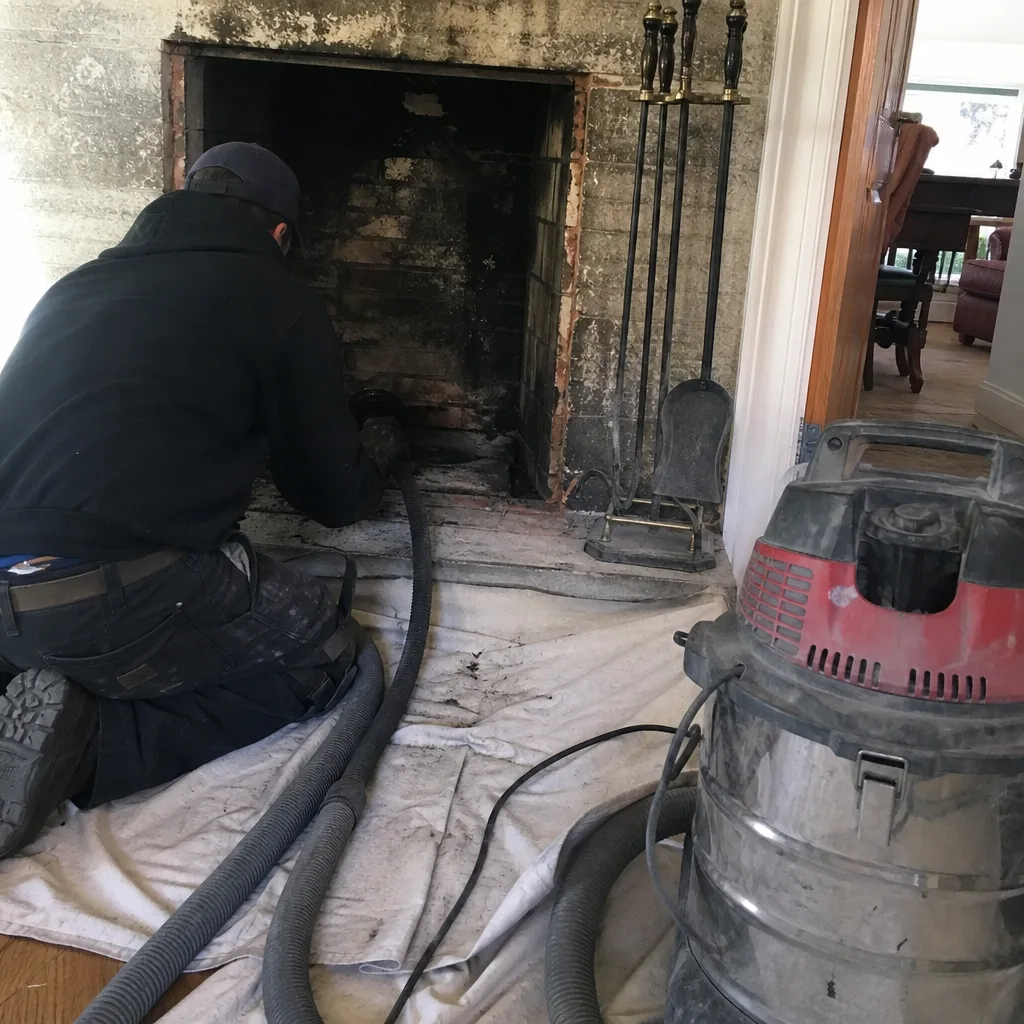 Before
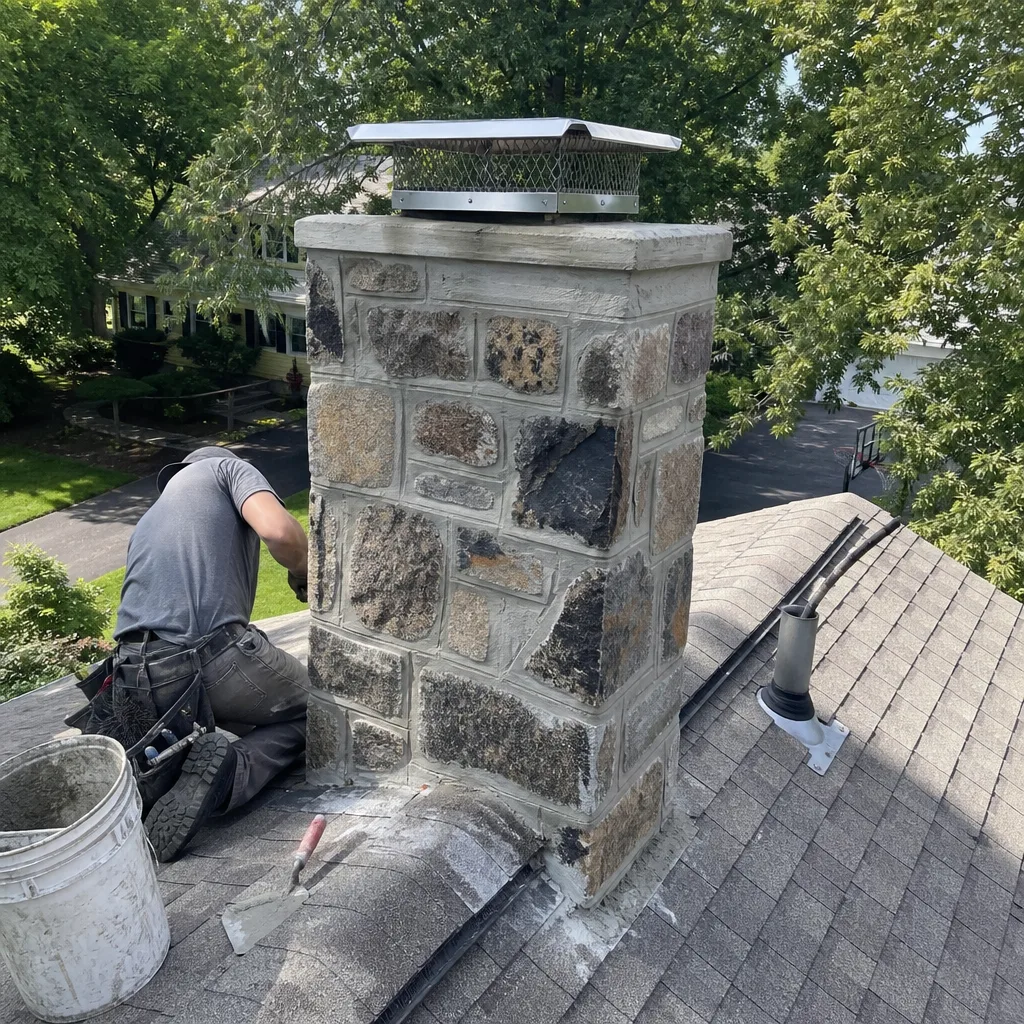 After
After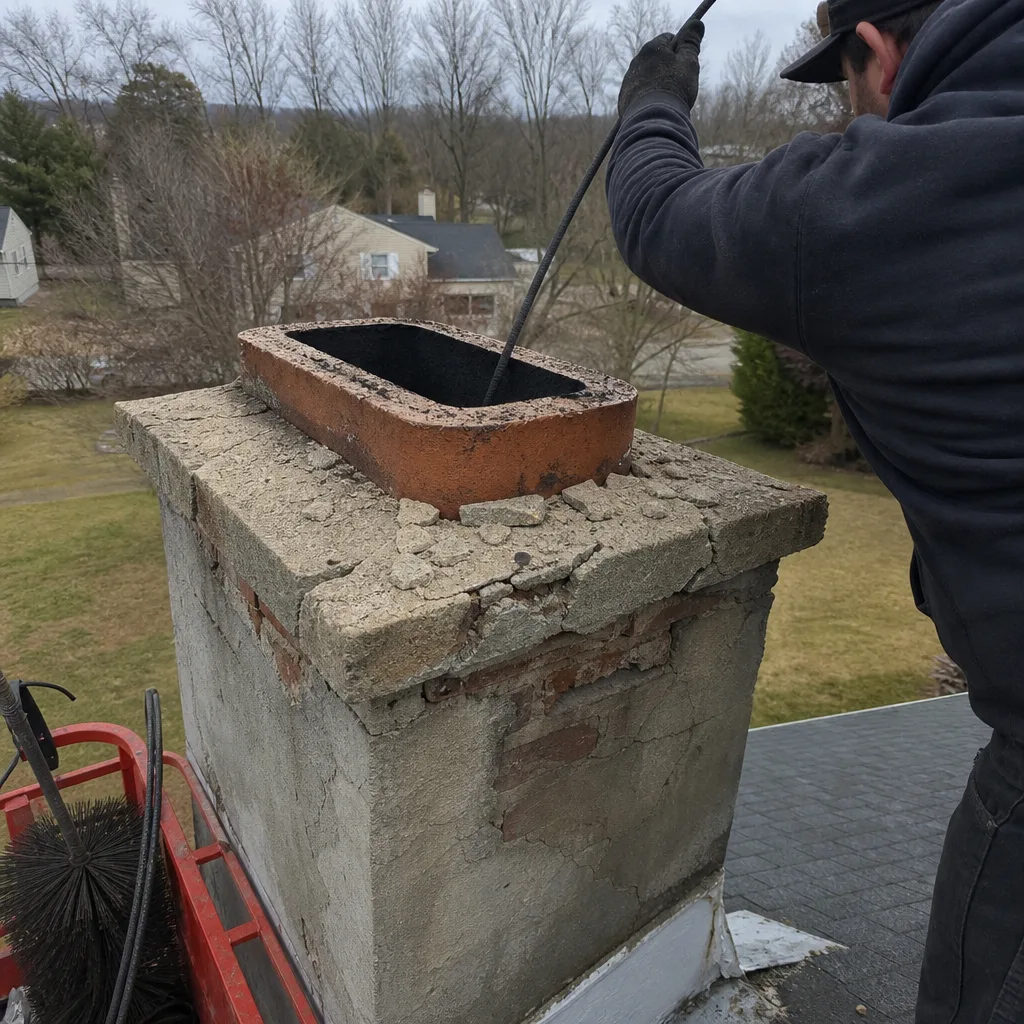 Before
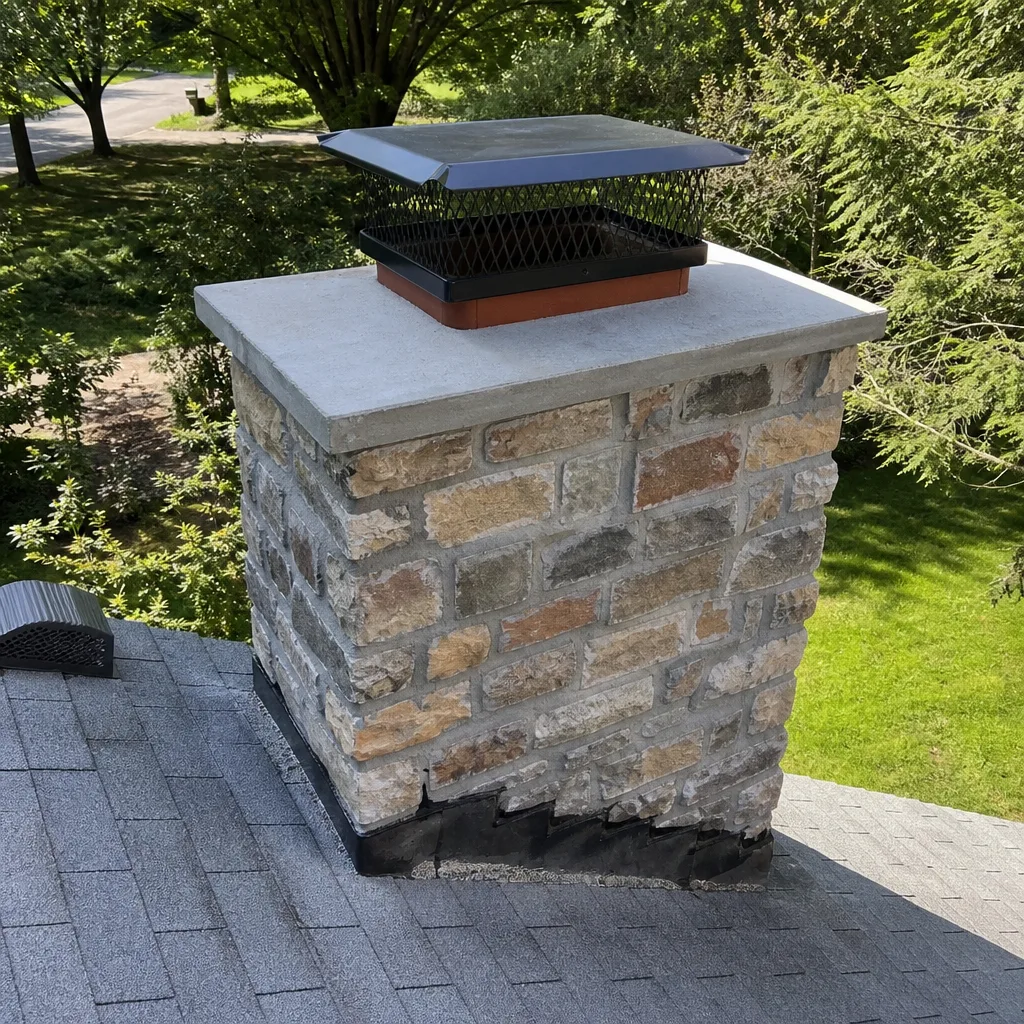 After
After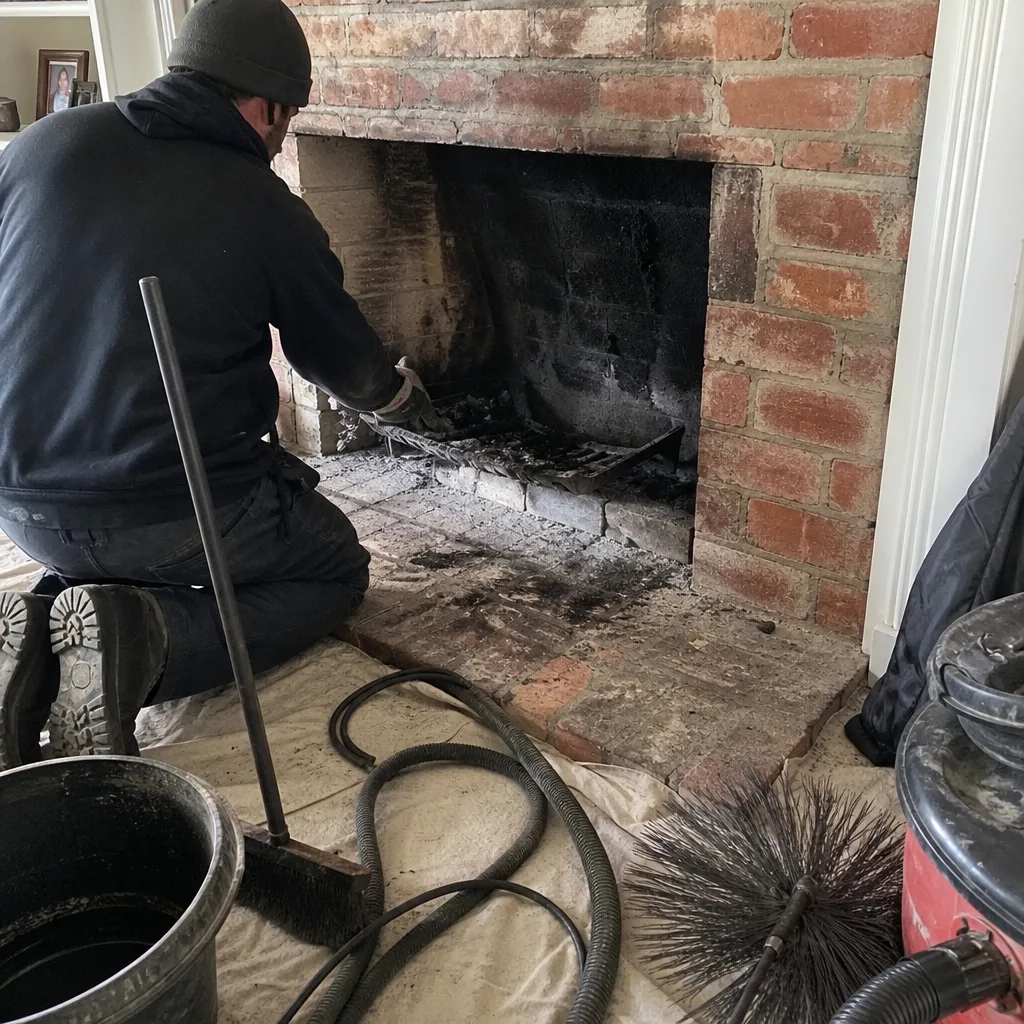 Before
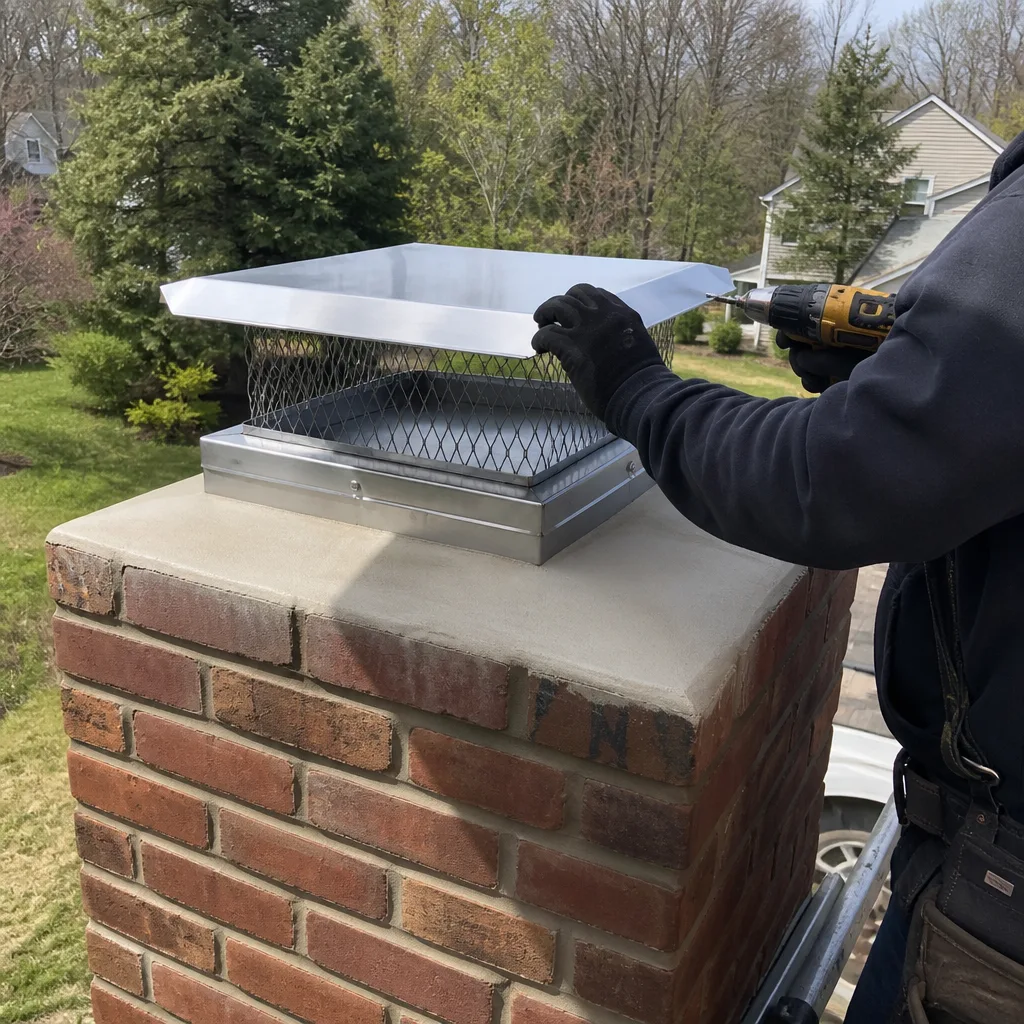 After
AfterDIY vs Professional Chimney Cleaning: The Lansdale Homeowner’s Decision Guide
Here’s something the hardware store won’t tell you: chimney brush kits are engineered for stage-1 creosote, the dry, flaky deposit that brushes off like burnt toast. In Lansdale, where winter burns run long and shoulder-season fires are common, we regularly find stage-2 or stage-3 creosote in flues that homeowners have “cleaned” themselves. The brushing doesn’t remove it. It compresses it into a harder, more flammable layer, and the next professional pays more to break it up. This guide walks you through what DIY chimney cleaning actually accomplishes, what it cannot, and why the documentation gap matters more than most Lansdale homeowners realize. For related reading, see our How to Hire a Chimney Cleaning Contractor in Lansdale: A Step-by-Step Guide.
Quick Answer
DIY chimney cleaning can remove light, stage-1 surface soot and ash from accessible areas, but it cannot verify flue liner condition, identify hidden creosote stages, or produce the camera-documented record that insurers, home inspectors, and real estate transactions in Lansdale require. Professional Chimney Cleaning & Sweep in Lansdale includes NFPA 211 Level 2 inspection with photo documentation, which is the standard buyers and insurers actually ask for.
Table of Contents
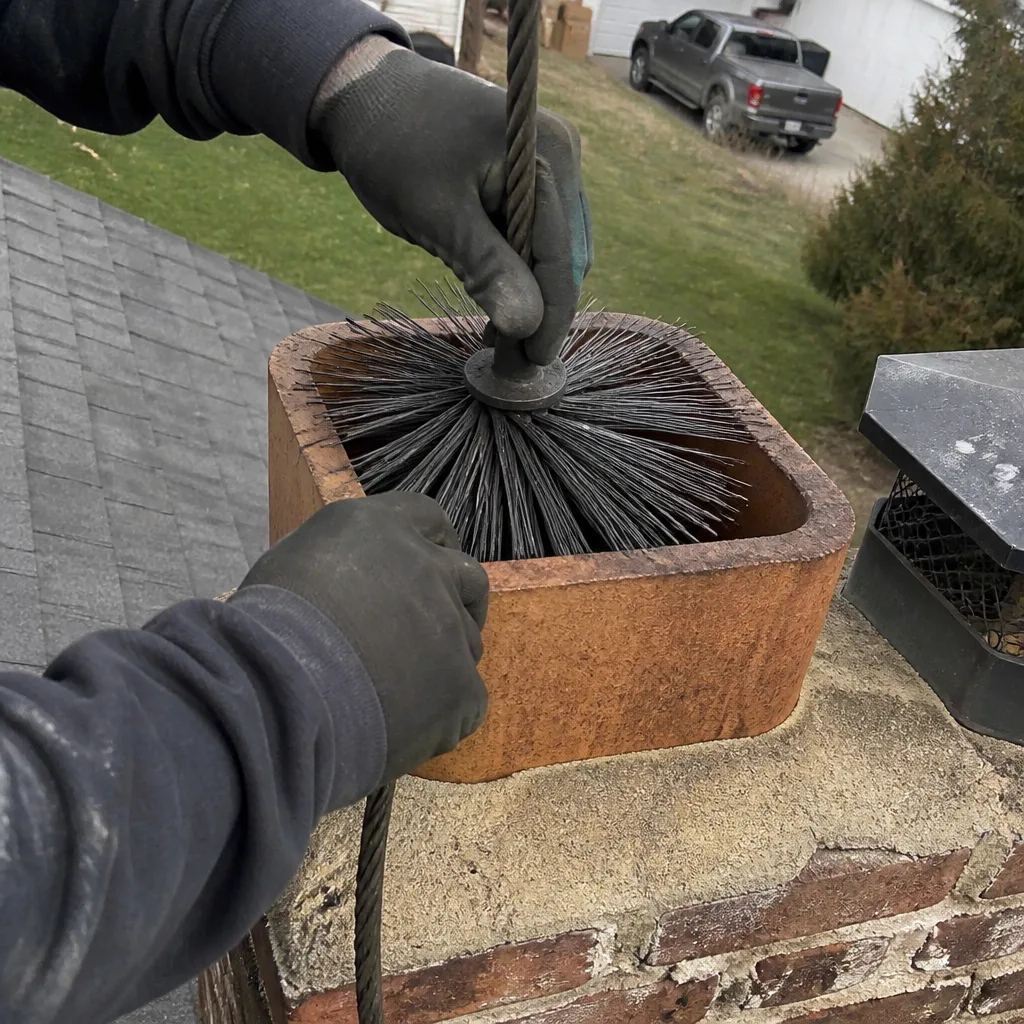
- What DIY Actually Cleans (And What It Doesn’t)
- The Creosote Problem: Why Stage Matters
- Equipment Reality: Consumer Kits vs. Professional Tools
- The Documentation Gap: What DIY Leaves Behind
- The Lansdale Resale Context: What Buyers Actually Ask For
- When DIY Makes Sense (And When It Doesn’t)
- Cost Comparison: Real Numbers for Lansdale
- Safety Limits: What You Should Never Handle Yourself
 Before
 After
AfterWhat DIY Actually Cleans (And What It Doesn’t)
Let’s be precise about scope. A homeowner with a basic brush-and-rod kit, a shop vacuum with HEPA filtration, and a headlamp can accomplish specific, limited tasks:
- Smoke shelf debris removal. The smoke shelf sits behind the damper, collecting fallen soot, bird nesting material, and ash. It’s accessible from the firebox in most masonry fireplaces. A homeowner can reach this with a brush and vacuum.
- Firebox wall brushing. Surface soot on the firebrick or refractory panels brushes off readily. This is cosmetic maintenance, not structural inspection.
- Flue brushing (partial, conditional). If the flue is straight, short, and the creosote is stage-1 (dry, flaky, black), a homeowner can run a brush through from top or bottom. This is where the limitations begin.
- Damper face cleaning. The damper plate and frame accumulate ash that interferes with full closure. Accessible and cleanable.
What DIY cannot address, by the physics of the equipment and the geometry of the system:
- Flue liner condition. No consumer kit includes a camera. You cannot see cracks, spalling, deterioration, or gaps in a clay tile liner, and these defects are not inferable from surface brushing.
- Smoke chamber integrity. The smoke chamber, the area above the damper that funnels smoke into the flue, is often corbeled brick or parged with refractory mortar. Parging cracks and gaps are common failure points for drafting and fire safety. Inaccessible to brushing from below; invisible without camera access.
- Creosote stage verification. Stage-2 creosote (shiny, hard, tar-like) and stage-3 (glazed, dense, requiring chemical treatment or rotary power equipment) feel different on a brush but are often misidentified by homeowners as “just dirty.” Brushing stage-2 or 3 without chemical pretreatment polishes the surface and drives deposits deeper into liner joints.
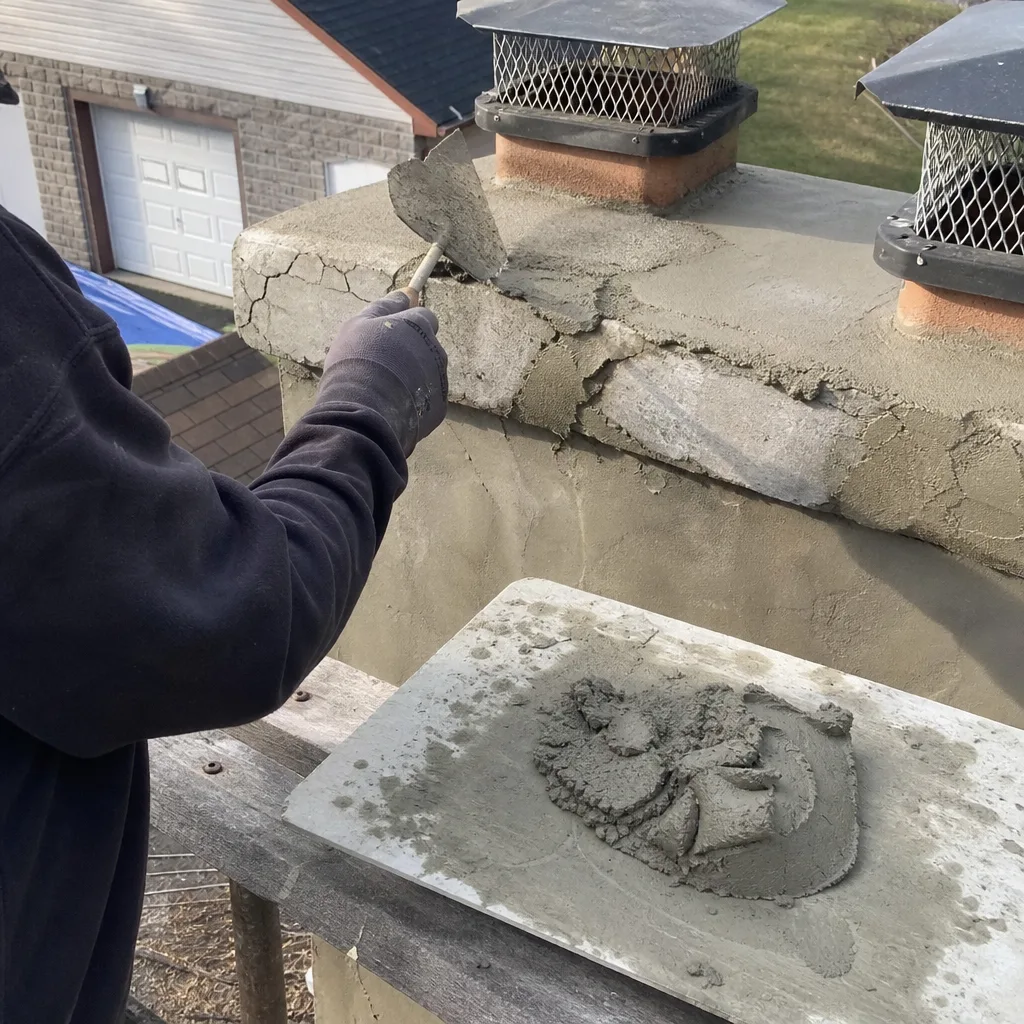
- Chimney crown, cap, and exterior masonry. These require ladder or roof access and inspection for water intrusion, the leading cause of chimney damage in Lansdale’s freeze-thaw climate.
- Clearance to combustibles. NFPA 211 specifies minimum clearances between chimney components and framing. No DIY kit measures this.
In our experience across Lansdale neighborhoods from Upper Gwynedd to Towamencin, the most common post-DIY finding is a flue that looks cleaner from the firebox view but harbors compressed stage-2 deposits above the first bend. The homeowner sees black dust on the brush and assumes success. The camera tells a different story.
The Creosote Problem: Why Stage Matters
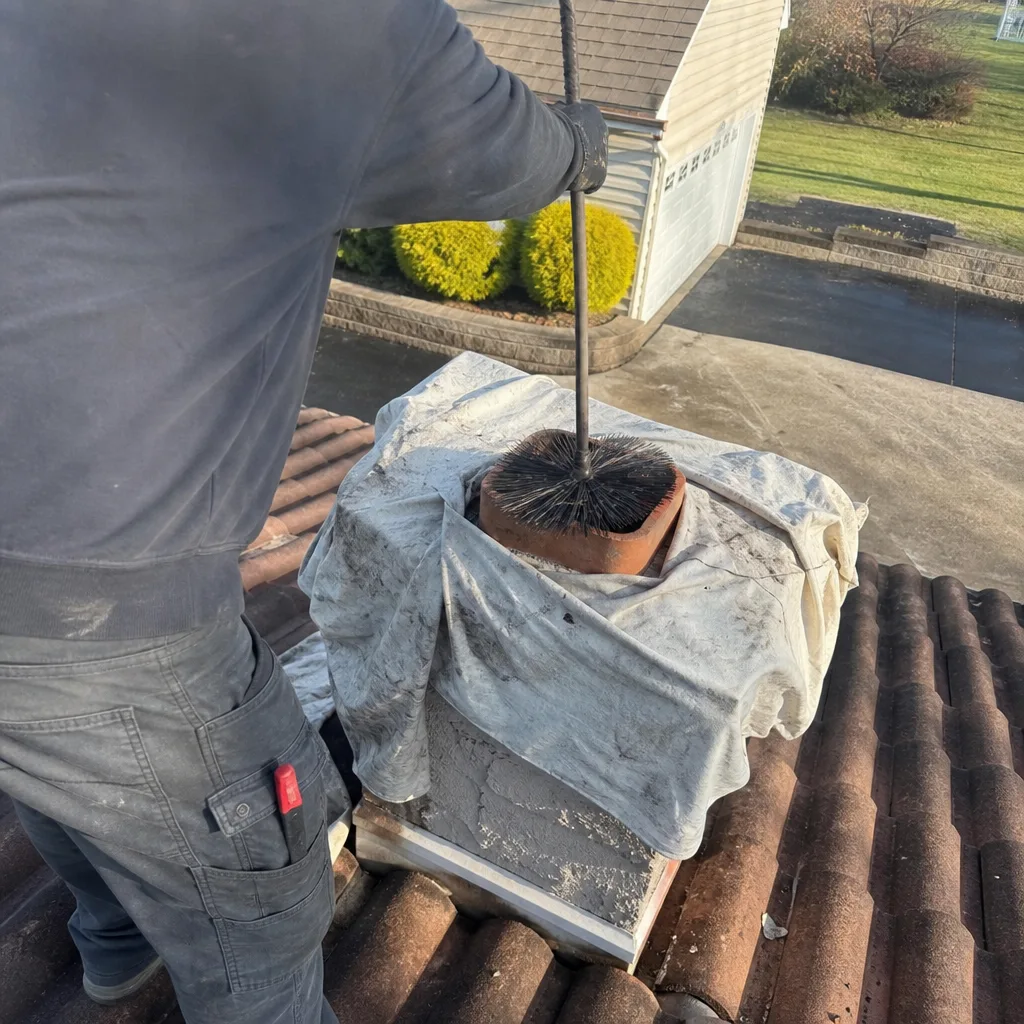
Creosote classification is not academic. The National Fire Protection Association (NFPA) defines three stages, and each demands different treatment. Misidentification is where DIY effort becomes counterproductive.
Stage-1 creosote forms with dry, well-seasoned hardwood burned at adequate temperatures. It’s black, flaky, and has high ash content. A standard wire brush removes it. This is the only stage a consumer kit is designed for.
Stage-2 creosote develops when wood is burned at lower temperatures or with higher moisture content. It condenses as a shiny, tar-like deposit that adheres to flue walls. Brushing alone does not remove it. It requires chemical treatment, typically a powder or spray applied and allowed to react for 12-24 hours before mechanical removal with a rotary power sweep. In Lansdale, we see stage-2 frequently in fireplaces used for ” ambiance” fires, short burns that never reach full combustion temperature. Our Seasonal Chimney Cleaning Care for Lansdale: Year-Round Homeowner’s Guide explains how burn patterns shift with the seasons.
Stage-3 creosote is glazed, hardened, and often described as looking like black glass. It forms from prolonged low-temperature burning, typically with unseasoned wood or restricted air supply. Stage-3 is the most combustible form and the most difficult to remove. It requires repeated chemical treatment cycles and rotary mechanical cleaning. Attempting to brush stage-3 creosote is ineffective and can damage liner tiles.
The critical point: stage identification requires visual inspection, often with a camera, and sometimes requires probing with a specialized tool. A homeowner brushing a flue cannot distinguish stage-1 from early stage-2 by feel alone. We’ve documented cases in Lansdale’s older housing stock, particularly pre-1980 masonry chimneys in the downtown historic district, where homeowners compressed stage-2 deposits over multiple DIY seasons, creating a glazed layer that required extensive chemical treatment to break down.
The fire risk is specific and real. Stage-3 creosote ignites at approximately 451°F, a temperature readily achieved in normal fireplace operation. A flue with stage-3 deposits is a latent ignition source. Cleaning that does not remove the deposit does not reduce the risk.
Equipment Reality: Consumer Kits vs. Professional Tools
Honest assessment of equipment capabilities, not a sales pitch. Here’s what each category actually does.
Consumer-grade brush-and-rod kits ($30-$80 at hardware stores):
- Polypropylene or wire brushes in fixed diameters (typically 6″, 7″, 8″)
- Flexible fiberglass or steel rods, 3-6 feet each, threaded together
- Designed for straight, single-flue masonry chimneys with stage-1 deposits
- No vacuum integration; debris falls into firebox or fireplace
- No camera, no lighting, no measurement capability
The physics limitation: a brush on a rod cleans by contact pressure against the flue wall. In a straight flue, this works adequately for stage-1. In an offset flue, a common feature in Lansdale’s split-level and ranch homes built 1960-1990, the rod binds at the offset and the brush loses wall contact. The homeowner cleans the straight section and misses the offset, which is often where the heaviest deposits accumulate due to turbulence.
Professional rotary power sweeping:
- Flexible steel cable driven by a variable-speed drill or dedicated motor
- Whisker or button-head attachments that expand to flue diameter under centrifugal force
- Integrated HEPA vacuum collection at the firebox or flue base
- Chemical treatment capability for stage-2 and stage-3 deposits
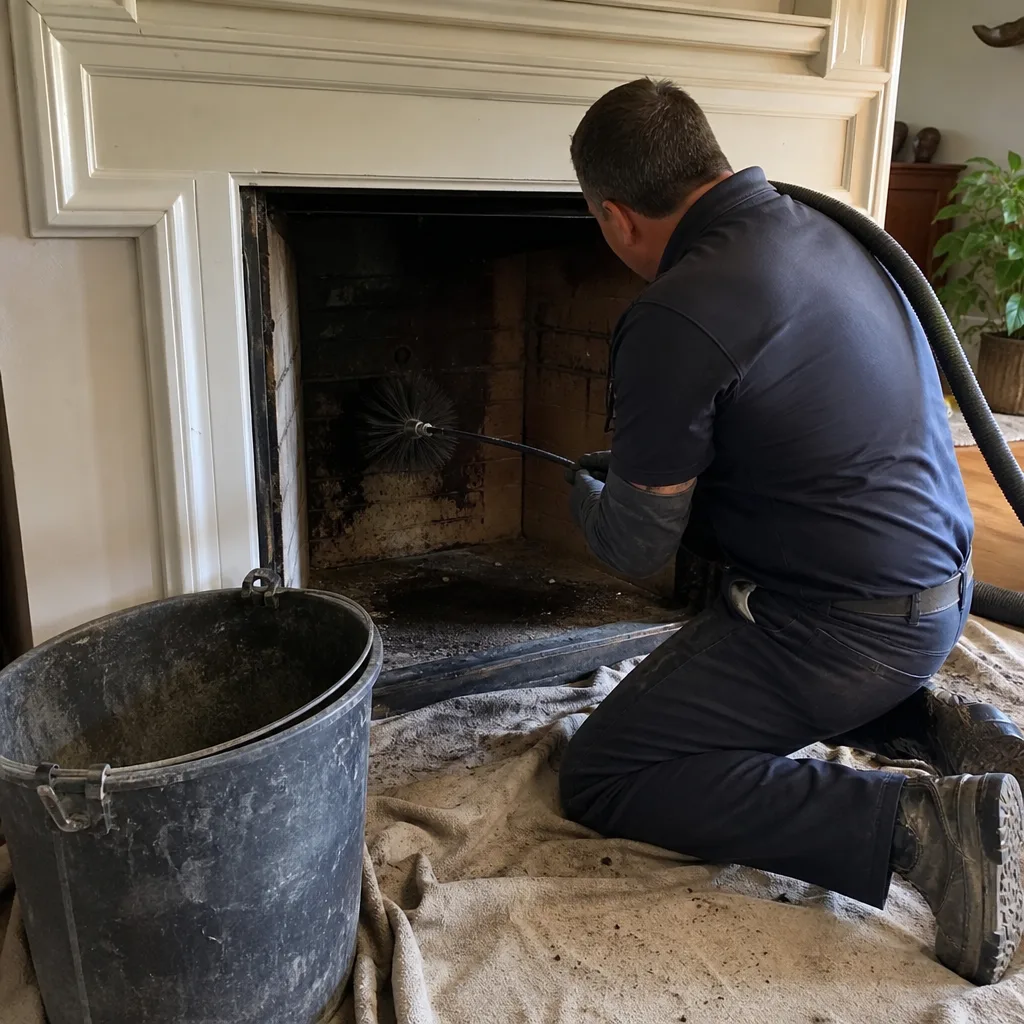
The difference is contact dynamics. A rotary whip expands to maintain wall pressure around bends and offsets. The vacuum captures debris at source, preventing contamination of the home. Chemical pretreatment breaks the bond of tar-like deposits before mechanical removal.
Camera inspection equipment:
NFPA 211 Level 2 inspection requires a camera capable of documenting the full flue length, smoke chamber, and accessible portions of the firebox and exterior. Professional cameras from manufacturers like Wohler or Chim-Scan provide LED lighting, articulating heads, and video recording. This is not a “nice to have.” It is the inspection standard that insurers and home inspectors reference.
Materials sourcing matters for repair work that follows inspection. When we identify liner damage requiring relining, we specify materials from DuraFlex or HeatShield based on the application. DuraFlex stainless steel liners carry specific UL listings for solid fuel and gas. HeatShield cerfractory foam is engineered for resurfacing deteriorating clay tile liners without full replacement. These are not consumer-available products, and their specification requires condition documentation that only camera inspection provides.
The Documentation Gap: What DIY Leaves Behind
This is the core argument reframed. The question is not whether you can clean your chimney. The question is whether cleaning it produces what you actually need.
What homeowners need from chimney maintenance, increasingly:
- Insurance documentation. After a chimney fire, insurers investigate maintenance history. A DIY cleaning log, even if meticulously kept, carries no third-party verification. Insurers may deny claims or reduce payouts where professional inspection records are absent. We’ve worked with Lansdale homeowners who faced this gap after minor fire events.
- Real estate transaction compliance. Pennsylvania’s seller disclosure requirements include known defects in heating systems. A chimney with undocumented condition is a latent defect. Buyer’s attorneys in Lansdale’s active resale market increasingly request Level 2 inspection reports as transaction contingencies. A DIY maintenance record does not satisfy this request; it typically triggers a professional inspection at seller expense, often under transaction time pressure.
- Warranty and guarantee support. Manufacturer warranties for inserts, liners, and caps require proof of professional maintenance. Famco and Copperfield product warranties, like most in the industry, specify professional installation and annual professional inspection. DIY maintenance voids these protections.
- Baseline for future comparison. Condition documentation creates a timestamped record. Deterioration rates, from minor spalling to liner joint separation, are assessed by comparing current camera images to prior records. DIY cleaning produces no comparable archive.
Clause 4 of the Haven Standard, which we’ve applied since 2009, requires a documented photo record on every job. Not because documentation is impressive, but because it is the working record that answers questions later. Questions from insurers. Questions from buyers. Questions from the homeowner themselves, five years later, trying to remember whether that crack was noted before.
The 38,000+ chimneys we’ve inspected and cleaned since 2009 each carry this record. It’s not marketing. It’s the standard that the transaction environment now demands.
The Lansdale Resale Context: What Buyers Actually Ask For
Lansdale’s housing market has specific characteristics that amplify the documentation issue. The borough and surrounding Montgomery County townships, Upper Gwynedd, Towamencin, Hatfield, have seen significant turnover in homes purchased between 2015 and 2020. Many buyers in that cohort are now selling into a market where buyer sophistication has increased.
What we’re seeing in 2024-2025 transactions:
- Home inspectors are flagging chimneys without recent professional inspection records. This is a change from five years ago. Inspectors, responding to insurer pressure and liability exposure, increasingly recommend Level 2 inspection where no documentation exists.
- Buyer’s attorneys in Montgomery County transactions request chimney inspection contingencies. The contingency language typically references “NFPA 211 Level 2 inspection by a certified chimney professional.” DIY maintenance is explicitly excluded.
- Insurance binders for new purchases require proof of chimney maintenance. This is particularly common with homes heated primarily by wood or pellet stoves. A DIY log does not satisfy underwriting requirements.
- Historic district properties face additional scrutiny. Lansdale’s downtown historic district and adjacent areas with pre-1940 construction often have unlined or partially lined masonry chimneys. These require specialized assessment that no consumer kit provides.
The cost of documentation failure is not theoretical. A homeowner who has cleaned their own chimney for years, then faces a transaction contingency, pays for rush inspection, potentially pays for deferred repairs identified under time pressure, and may delay closing. The DIY savings evaporate.
We provide free second opinions on any written estimate, including inspection reports generated under transaction pressure. If a competing inspector identifies “urgent” repairs, bring us the written report. We’ll camera-verify and quote independently. Clause 1 of the Haven Standard, written price before any work starts, applies to these reviews as to any job.
When DIY Makes Sense (And When It Doesn’t)
DIY chimney cleaning is not universally wrong. It is conditionally appropriate. Here is the honest breakdown.
Reasonable DIY scenarios:
- Light-use gas fireplace with minimal soot accumulation, used primarily for ambiance
- Recent professional baseline on file (within 24 months), with camera-documented liner condition confirmed sound
- Same-season supplemental cleaning between professional visits, for heavy-use wood-burning households
- Firebox and smoke shelf maintenance only, with full understanding that flue condition is unverified
- Homes with direct-vent gas inserts, where the venting system is sealed and manufacturer’s maintenance schedule permits homeowner-accessible cleaning
Scenarios where DIY substitutes for needed professional work:
- Any wood-burning fireplace or stove without prior camera inspection within 24 months
- Noticeable drafting problems, smoke spillage, or odor issues
- Visible exterior masonry deterioration, crown cracking, or cap damage
- Unknown creosote condition, particularly after a season of heavy use or unseasoned wood
- Pre-transaction preparation, where documentation will be requested
- Insurance renewal periods where carrier requires maintenance proof
- Any chimney serving a solid-fuel appliance in a home built before 1990 with original construction
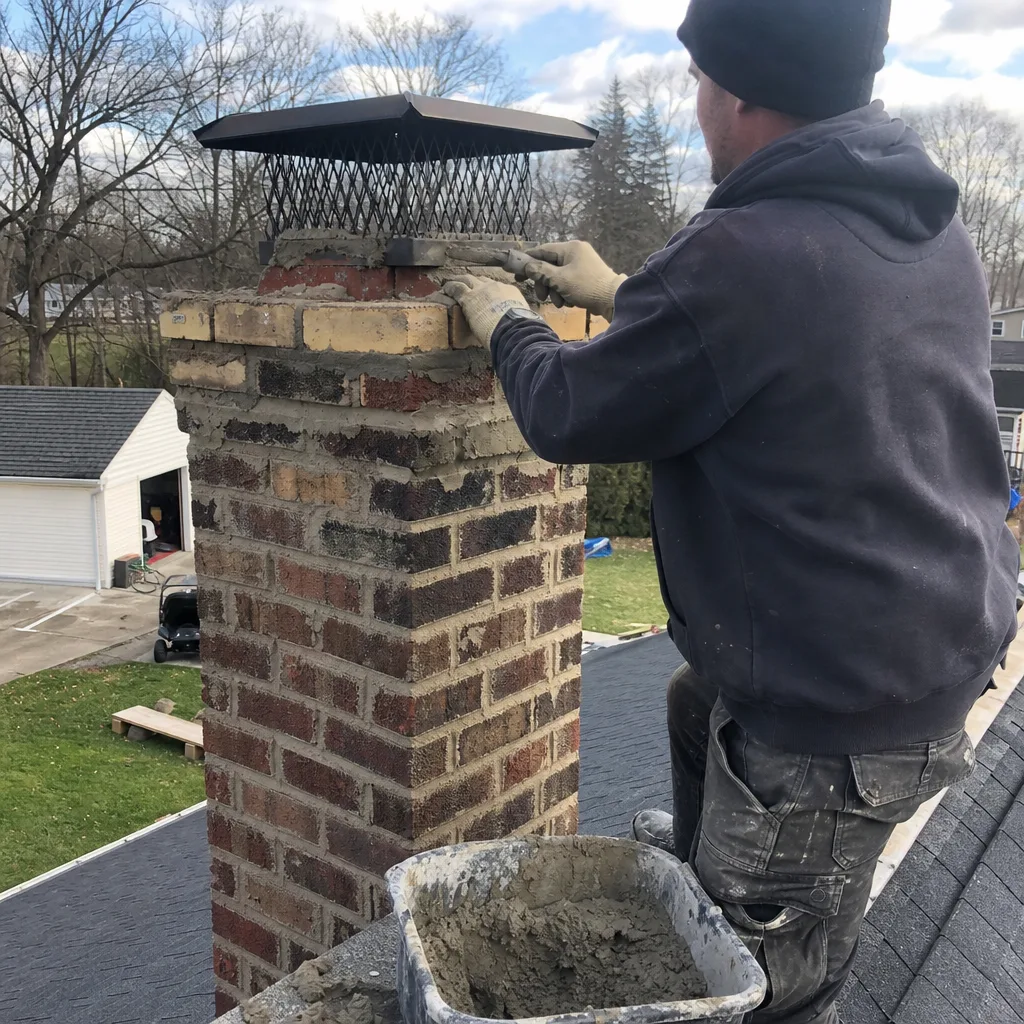
In Lansdale’s climate specifically, the freeze-thaw cycle accelerates exterior masonry deterioration. A homeowner can clean a flue internally while missing crown damage that admits water, which then destroys the liner from the outside. We’ve replaced liners in Whitpain and Worcester townships where the flue appeared clean but water intrusion through a cracked crown had destroyed the clay tile backing. The DIY cleaning was technically successful and practically meaningless.
Cost Comparison: Real Numbers for Lansdale
Direct cost comparison, with the documentation value included.
| Approach | Initial Cost | What’s Included | What’s Missing | Typical Total 5-Year Cost |
|---|---|---|---|---|
| DIY brush kit | $30-$80 | Basic brushing tools | Camera inspection, documentation, creosote stage verification, repair identification, insurance/transaction record | $150-$400 (kit replacement, shop vac filters, potential emergency repairs from undetected damage) |
| Professional sweep with Level 1 inspection | $150-$250 | Mechanical cleaning, basic visual inspection, debris removal | Camera documentation, full liner assessment, smoke chamber inspection | $750-$1,250 (annual service) |
| Professional sweep with NFPA 211 Level 2 inspection | $275-$425 | Rotary power sweeping, camera inspection of full flue and smoke chamber, photo documentation, written condition report, written price for any recommended repairs | None; this is complete assessment and cleaning | $1,375-$2,125 (annual service with documented baseline) |
The Level 2 inspection price range in Lansdale reflects chimney height, accessibility, and appliance type. A single-story ranch with straight flue and gas insert sits at the lower end. A three-story colonial with offset masonry flue and wood-burning fireplace, requiring roof access and extended camera run, sits at the upper end.
Our pricing is quoted in writing before work begins, per Haven Standard Clause 1. No exceptions. The written scope specifies what will be inspected, what equipment will be used, and what documentation will be delivered. The written warranty, backed by the 365-Day Done Right Promise, specifies remedy if any element is not completed as described.
Hidden cost of DIY: the transaction surprise. A homeowner who has “saved” $200 annually for five years, then faces a $400 rush Level 2 inspection plus $1,800 in deferred repairs to satisfy a buyer contingency, has not saved money. They’ve shifted cost to a higher-pressure moment and lost negotiation position.
Safety Limits: What You Should Never Handle Yourself
Specific safety boundaries, not general warnings.
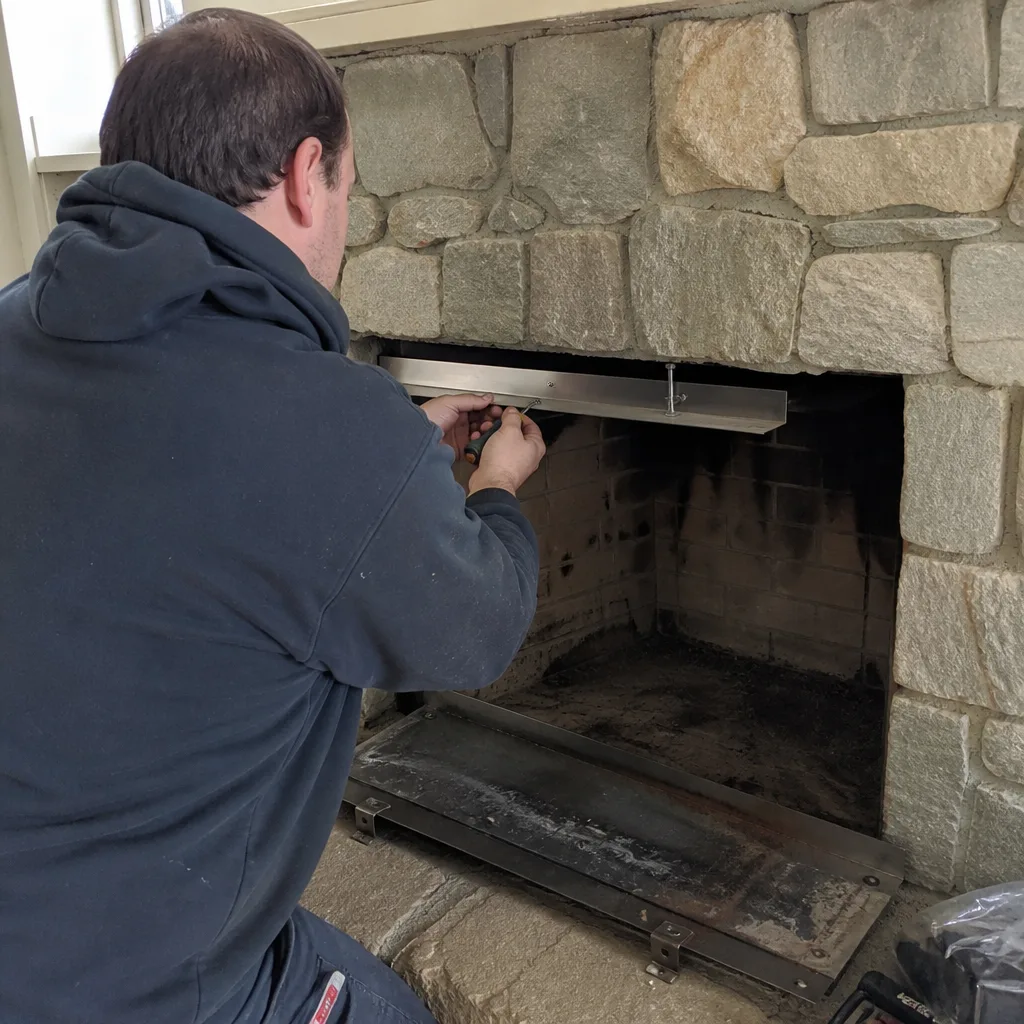
High-tension spring components. Top-sealing damper systems, increasingly common in Lansdale homes with energy-retrofit chimney caps, use high-tension springs to seal against weather. These springs store significant mechanical energy. Improper handling can release suddenly, causing laceration or eye injury. We do not recommend homeowner service of these mechanisms.
Roof and ladder work. Chimney crown, cap, and exterior masonry inspection requires roof access. Falls from elevation are a leading cause of homeowner injury. Professional technicians use fall protection, roof anchors, and ladder stabilization equipment specified by OSHA. The cost of professional inspection includes this safety infrastructure.
Class III (glazed) creosote chemical treatment. Professional-grade creosote treatments contain alkaline compounds that require respiratory protection, skin protection, and controlled application. Improper application can damage liner materials, particularly stainless steel, and can create hazardous fumes if the fireplace is used before complete reaction.
Gas line and venting components. Any chimney serving a gas appliance involves combustion safety, carbon monoxide risk, and potential gas leak hazards. Fireplace Services in Lansdale includes gas appliance inspection as a specialized service. Carbon monoxide is odorless, colorless, and lethal. Drafting problems in gas venting can produce CO without visible warning signs. This is not a homeowner diagnosis domain.
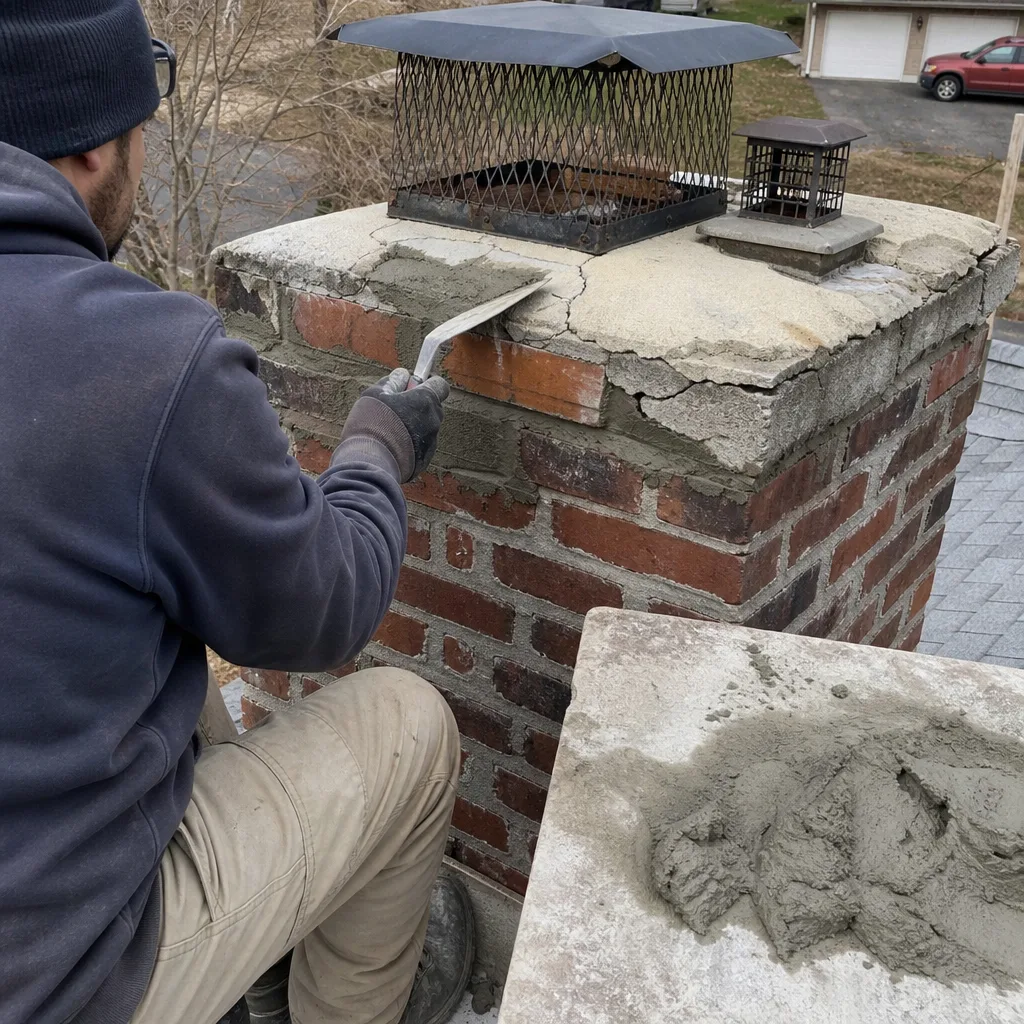
Structural masonry repair. Spalling brick, deteriorated mortar joints, and leaning chimney structures indicate foundation or structural issues. Cosmetic patching conceals progressive failure. Professional assessment determines whether repointing, partial rebuild, or foundation stabilization is required. Chimney Repair in Lansdale addresses these conditions with specified materials and documented structural assessment.
Common Mistakes to Avoid
- Assuming a clean firebox means a clean flue. The firebox is visible and accessible; the flue is not. Heavy creosote accumulation above the smoke chamber is common and invisible from below. We find this error repeatedly in Lansdale’s split-level homes, where homeowners clean what they can see and assume the rest matches.
- Using a shop vacuum without HEPA filtration. Standard shop vacuums exhaust fine particulate through the motor cooling path. Chimney soot contains silica and combustion byproducts that are respiratory hazards. HEPA filtration, with proper sealed containment, is required for safe debris removal.
- Brushing a flue from the bottom without roof termination check. Dislodged debris can obstruct a cap or damper at the top. A homeowner brushing from below may create a blockage that traps combustion gases. Always verify free exhaust after any cleaning.
- Ignoring the smoke chamber. The smoke chamber is the most common location of hidden creosote accumulation and the most frequent site of parging failure. No consumer kit reaches it effectively. In Lansdale’s 1970s-era construction, smoke chambers were often built with corbeled brick that creates turbulence and deposition. Camera inspection is the only reliable assessment.
- Assuming “no problems” means no inspection needed. Chimney deterioration is often asymptomatic until failure. Liner cracks, crown damage, and water intrusion progress without visible interior signs. The absence of smoke spillage or odor does not confirm system integrity.
- DIY cleaning before a planned professional inspection. Some homeowners clean before calling, thinking they’ll save money on the sweep portion. This removes surface deposits that help professionals assess burning habits and creosote formation patterns. The camera inspection remains necessary, and the cleaning portion is already incomplete. Call first; we’ll advise whether your DIY effort changes the scope.
When to Call a Professional
Call a professional when documentation matters, when condition is unknown, or when safety boundaries are reached. You can also browse more guides & resources on chimney maintenance and safety. Specifically: before burning season if no camera inspection exists within 24 months; when buying or selling a home in Lansdale or surrounding Montgomery County; after any chimney fire, however minor; when drafting problems, odors, or visible deterioration appear; and before installing any new appliance or liner system.
Level Two Chimney Lansdale offers free estimates in Lansdale and surrounding townships. Every estimate includes a written price, written scope, and written warranty before any work begins. Call (267) 327-4785 to schedule. Our technicians are background-checked, uniformed, and named on your appointment confirmation. You’ll receive a text when your technician is en route.
Frequently Asked Questions
A professional chimney sweep with NFPA 211 Level 2 camera inspection in Lansdale typically costs $275 to $425, depending on chimney height, flue configuration, and appliance type. A written price is provided before any work starts. Call (267) 327-4785 for an exact quote, estimates are free.
Liner replacement is only recommended when camera inspection documents specific defects: cracked or missing tiles, gaps at joints, spalling surfaces, or inadequate sizing for the connected appliance. We show you the camera footage and explain what code requires. If the liner is sound, we say so plainly. No recommendation is made without photo evidence you can see for yourself. Call (267) 327-4785 if you’ve been told you need a liner and want a free second opinion on the written estimate.
NFPA 211 recommends annual inspection for all chimneys, with cleaning frequency determined by creosote accumulation. In Lansdale’s climate, with typical winter burning from November through March, most wood-burning fireplaces and stoves require annual sweeping. Gas fireplaces with decorative logs typically require less frequent cleaning but still benefit from annual inspection of the venting system. The specific interval for your installation depends on fuel type, burn frequency, and wood moisture content. A camera-documented baseline allows us to recommend personalized intervals.
Skipped maintenance produces three cumulative risks: creosote accumulation increases fire hazard, water intrusion degrades liner and masonry, and undetected defects progress to failure points. In Lansdale’s freeze-thaw climate, minor crown cracks admitted in one winter can destroy a liner system by the third. The cost of deferred maintenance typically exceeds the cost of annual service by multiples. If you’re unsure of your chimney’s condition, a Level 2 inspection provides a documented baseline. Call (267) 327-4785 to schedule.
Generally, no. Major insurers in Pennsylvania increasingly require professional inspection documentation, particularly for solid-fuel heating systems. A DIY log lacks third-party verification, standardized format, and camera evidence. After a fire event, insurers may deny or reduce claims where professional maintenance records are absent. The documentation gap is the hidden cost of DIY maintenance.
Firebox and decorative log cleaning is typically within homeowner capability, following manufacturer instructions. However, the venting system, draft hood, and combustion air supply require professional inspection. Carbon monoxide risk from improper venting is lethal and undetectable without specialized equipment. We recommend professional inspection annually, with cleaning scope determined by condition. Level Two Chimney Lansdale home service includes gas appliance-specific assessment.
The Bottom Line
DIY chimney cleaning has a narrow, legitimate scope: light stage-1 deposits, accessible surfaces, and supplemental maintenance between professional visits where a camera-documented baseline already exists. It does not produce the inspection record that insurers, buyers, and transaction attorneys require. It cannot assess liner condition, smoke chamber integrity, or creosote stage. In Lansdale’s active resale market and freeze-thaw climate, the documentation gap is the decisive factor. The question is not whether you can clean your chimney. It’s whether cleaning it accomplishes what you actually need. For most Lansdale homeowners, particularly those without a recent Level 2 inspection on file, professional service with camera documentation is the cost-effective choice when total lifecycle cost, transaction risk, and safety are fully accounted.
Written by Corrine Halstead, Owner at Level Two Chimney Lansdale, serving Lansdale since 2009.