
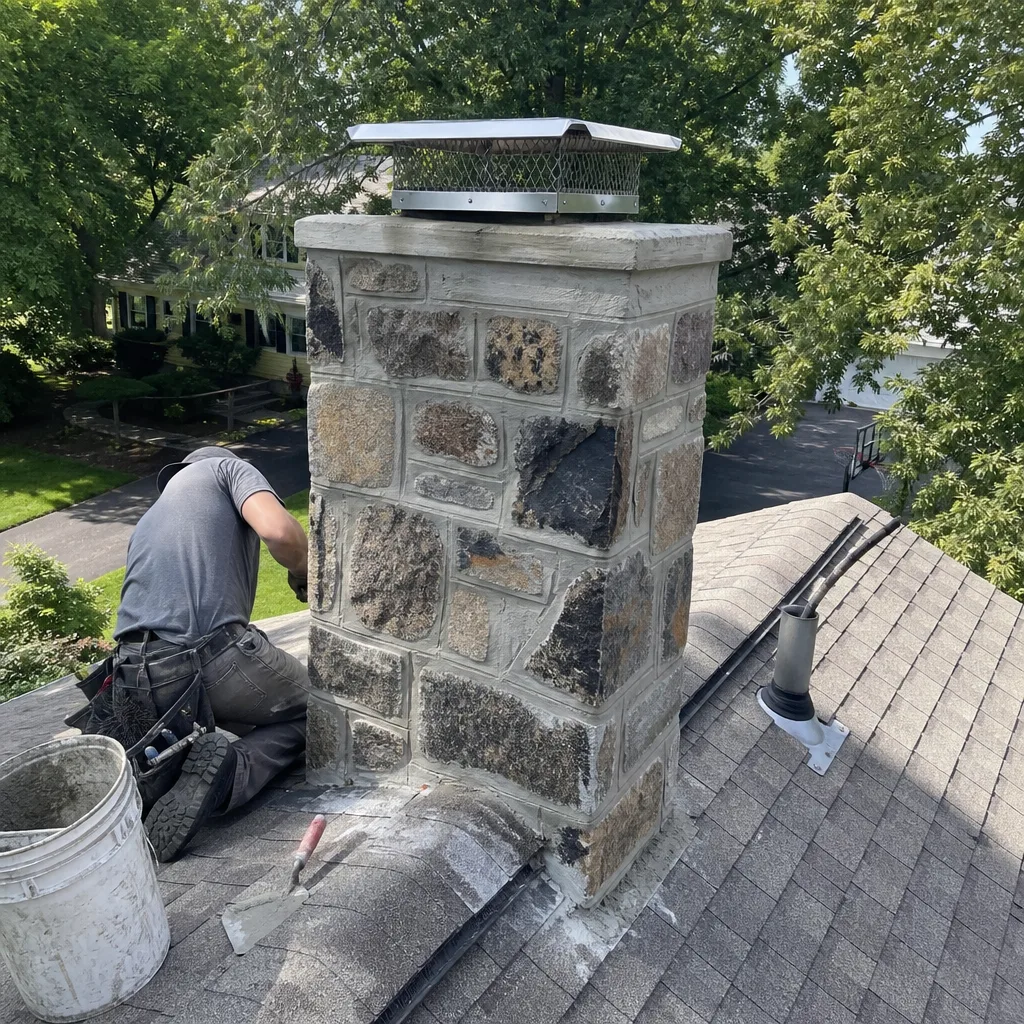
Level 1 sweep and inspection to the NFPA 211 annual standard - flue, crown, cap, and flashing checked and photographed
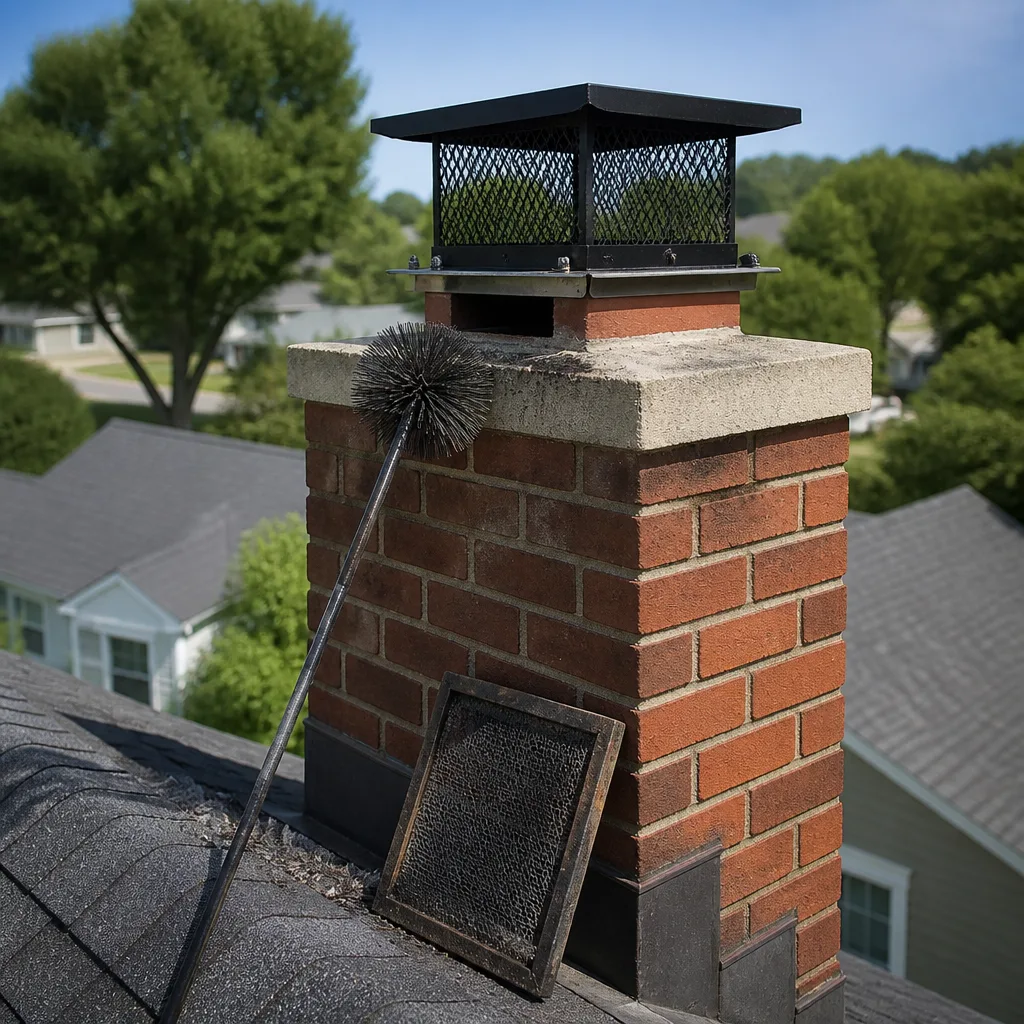
Chimney sweep logs do not sweep chimneys. They loosen some creosote - which then falls where a brush and vacuum still have to collect it.
 Before
 After
After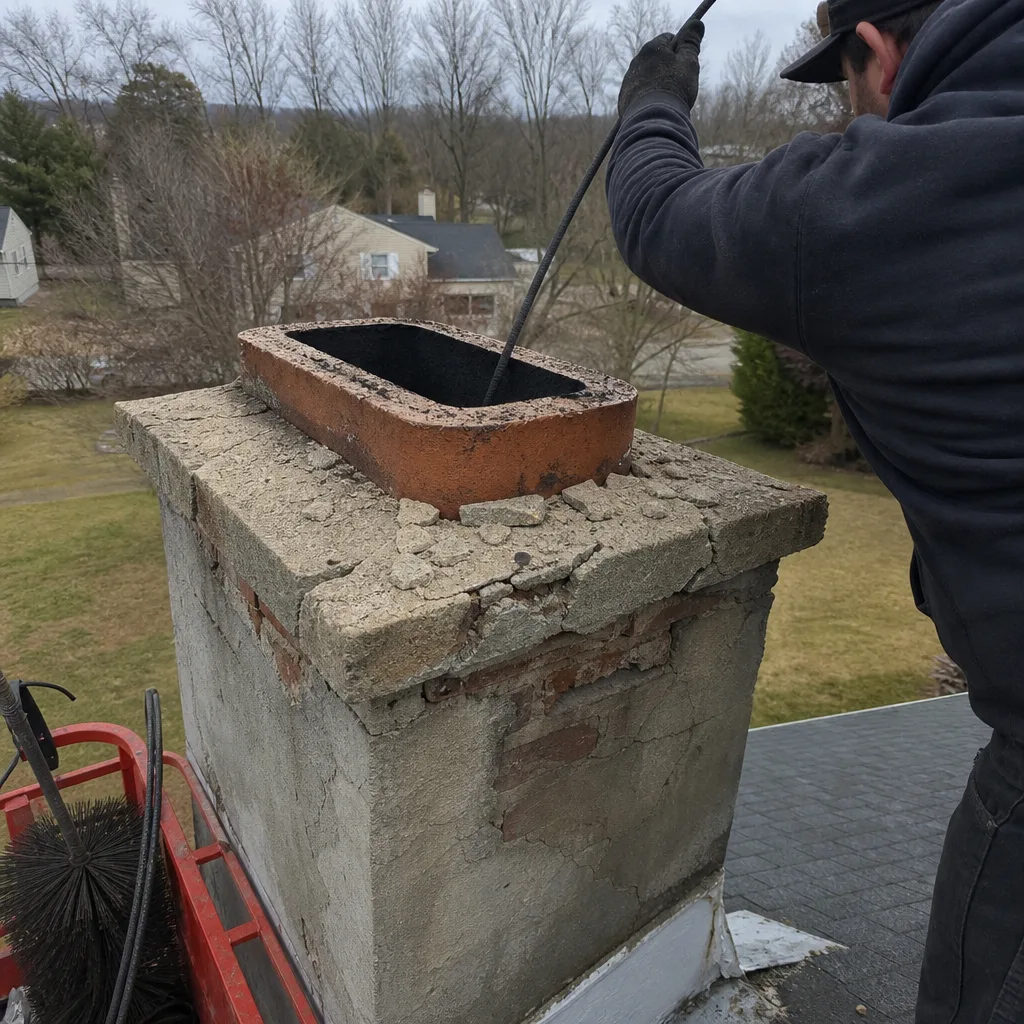 Before
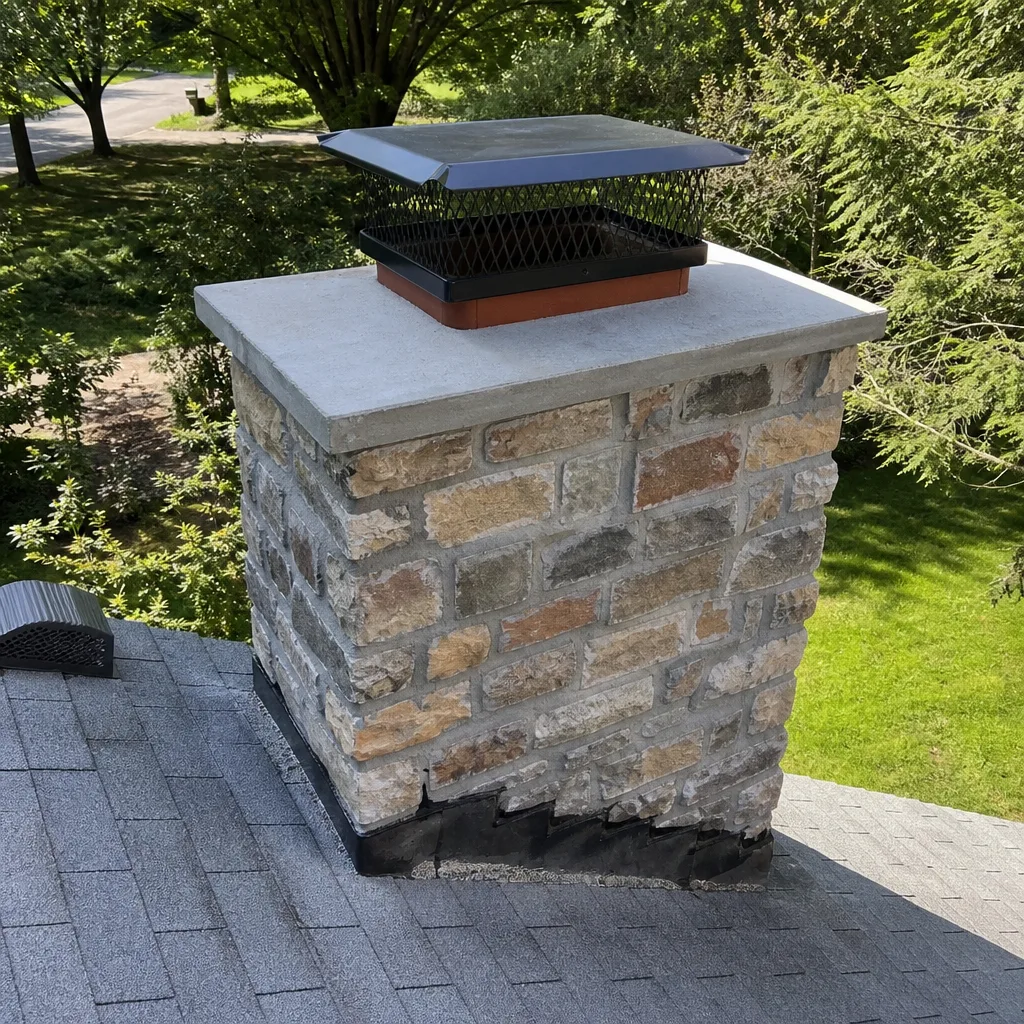 After
After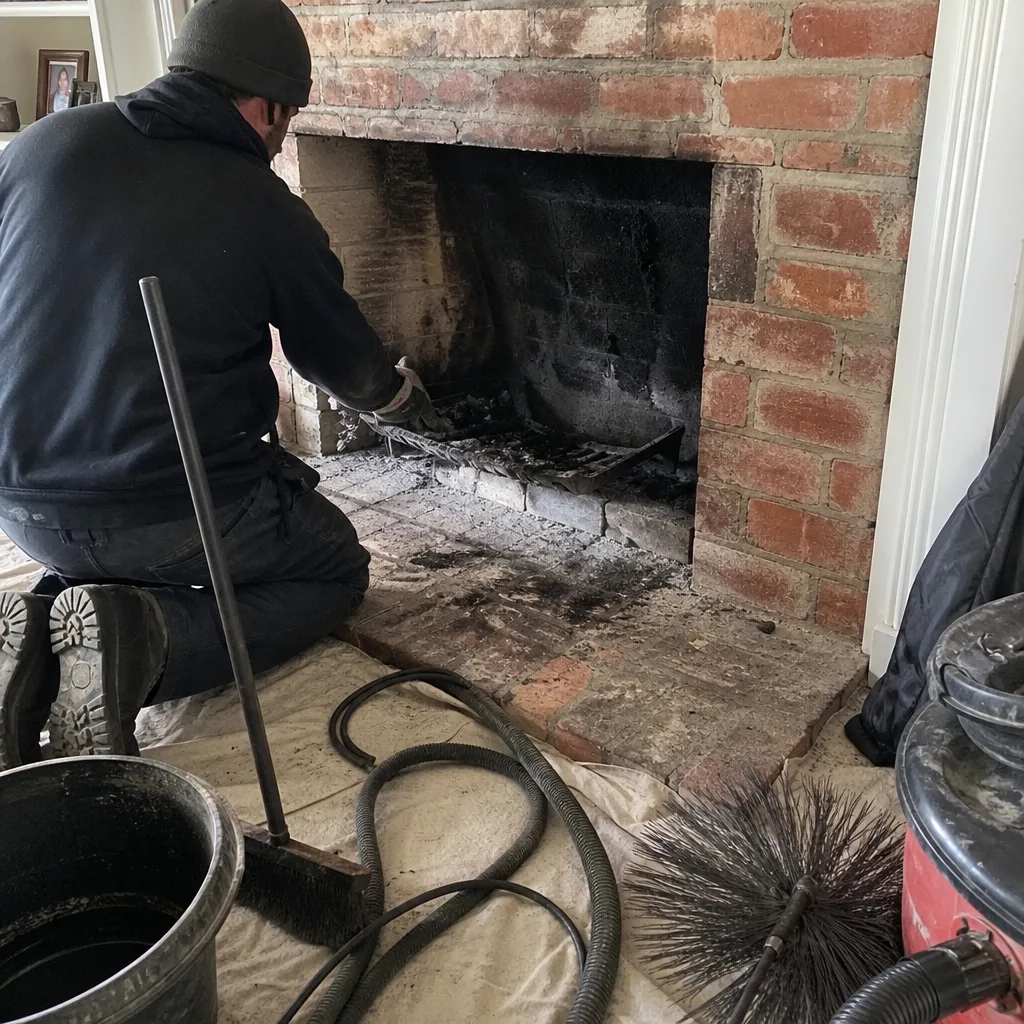 Before
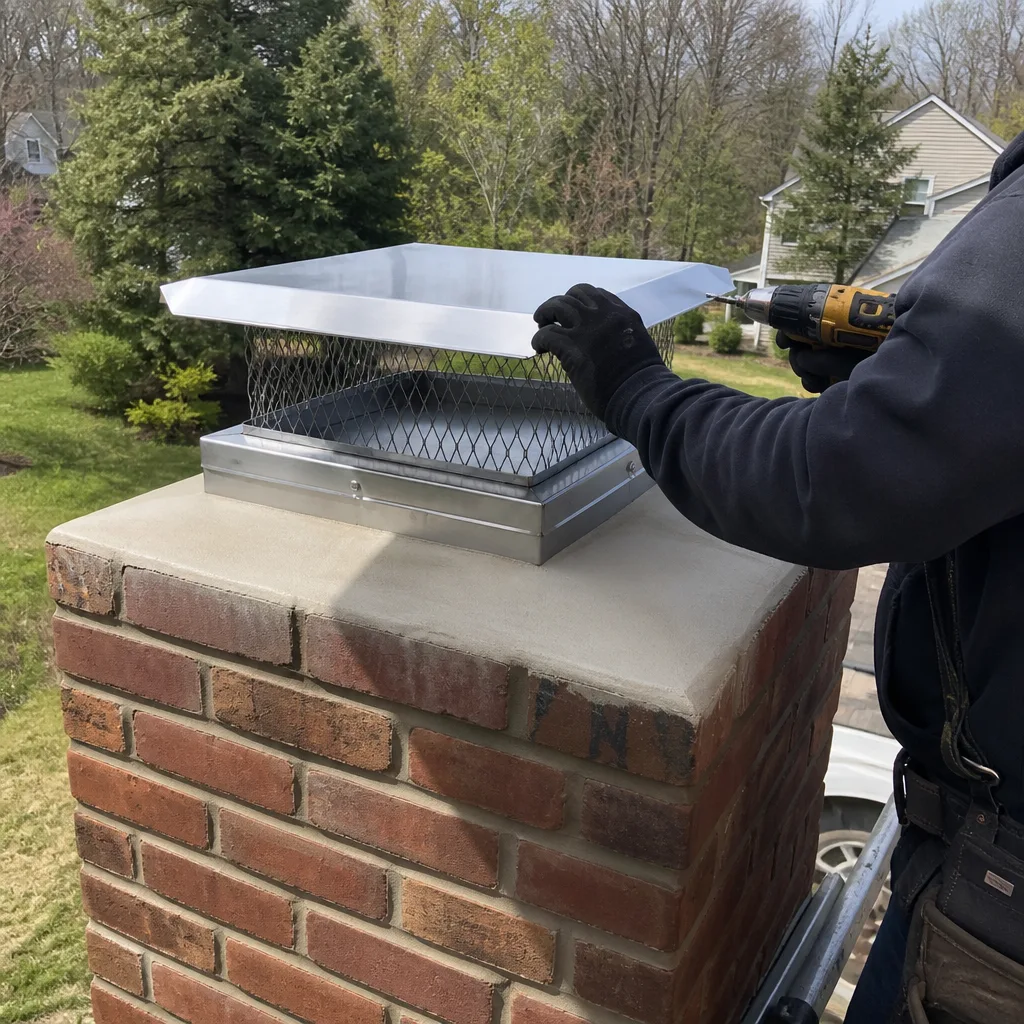 After
AfterCreosote Removal in Lansdale, PA
Creosote removal in Lansdale typically runs $199-$599, depending on how much buildup is present and which class of deposit your flue has accumulated. Most sweeps with moderate Class I or Class II buildup are completed in a single visit. Heavy Class III glazed creosote – the kind that clings to liner walls like hardened tar – requires chemical treatment and a follow-up, which affects both time and price.
If you burned wood last winter and haven’t had the flue cleaned since, there’s a reasonable chance creosote has built up to a level that warrants Chimney Cleaning & Sweep services before you light another fire. That’s not alarmism – it’s straightforward physics. Creosote is combustible. A quarter-inch of Class II buildup on a clay tile liner is enough to sustain a flue fire that can crack the liner, spread to framing, and turn a manageable maintenance task into a significant repair. We’ve seen it happen in homes all over Lansdale and the surrounding North Penn corridor.
At Level Two Chimney Lansdale, creosote removal is part of our broader Chimney Cleaning & Sweep in Lansdale service. Every visit starts with a camera-scan inspection so we can classify the buildup accurately before a single brush touches the flue. You get a written price before work starts – that’s not a policy we added recently, it’s how we’ve operated since 2009, and it’s written into Clause 1 of the Haven Standard. Questions before you book? Call (267) 327-4785 – a live person answers around the clock.
When You Need Creosote Removal
Creosote doesn’t announce itself until there’s a problem. Most homeowners in Lansdale find out they have a buildup issue one of three ways: a sweep flags it during a Level 1 Inspection, they notice something off when the fireplace is in use, or – worse – a chimney fire makes the decision for them. These are the clearest signs it’s time to schedule removal.
- A strong, sharp odor coming from the firebox. Creosote has a distinctive acrid smell that gets worse in humid weather. Lansdale summers are humid enough that a firebox that barely smelled in December can produce a noticeable chemical odor by July – a reliable sign that residue is baking on the liner walls.
- Visible black or brown residue inside the firebox or on the damper. Flaky, sooty deposits that brush off easily are typically Class I. Tar-like or shiny, hardened coatings are Class II or Class III and require more than a standard brush sweep to remove.
- Reduced draft or smoke spilling into the room. A narrowing flue passageway – caused by thick creosote buildup – restricts airflow. If your fire struggles to draw or smoke backs up into the living space, buildup is one of the first things to rule out.
- You burn wood regularly and haven’t had a cleaning in 12 months. The Chimney Safety Institute of America and NFPA 211 both recommend annual inspections and cleaning for any actively used wood-burning system. One cord of softwood burned over a season can deposit enough creosote to warrant professional removal, particularly in older homes common to Lansdale’s pre-war and mid-century neighborhoods.
- Your previous inspection documented Class II buildup. If a written report from a prior sweep noted moderate-to-heavy deposits, and you’ve burned since then without a follow-up cleaning, the situation has almost certainly gotten worse, not better.
- You’ve had a chimney fire – even a small one. A flue fire can accelerate creosote from Class II to Class III in a single event, and it may compromise the liner in ways that aren’t visible from below. If you heard a rumbling or roaring sound from the chimney during a fire, or noticed unusual heat near the chimney chase, a camera inspection and full creosote assessment should happen before the fireplace is used again.
Our Creosote Removal Process
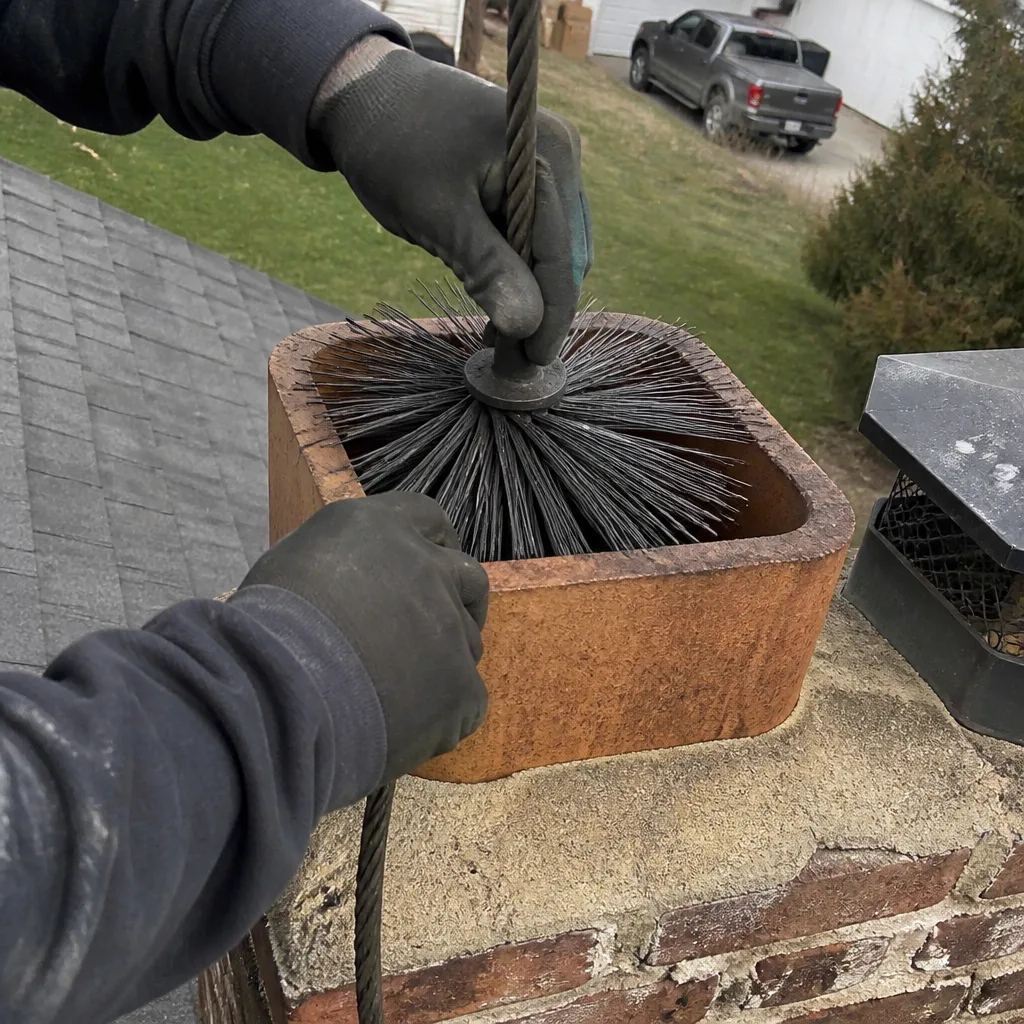
This is what happens from the moment our technician arrives at your Lansdale address to the moment they hand you the written job record.
- Camera-scan inspection and creosote classification. We run a camera down the flue before any cleaning begins. This gives us an accurate picture of the liner condition, the location and thickness of deposits, and – critically – which class of creosote we’re dealing with. Class I (flaky, dry), Class II (tar-like, crunchy), and Class III (glazed, hardened) each require a different approach. Skipping this step and going straight to brushing is how sweeps miss heavy glazed deposits or cause liner damage on cracked clay tiles. The camera footage is part of the documented photo record you receive at the end of the visit, per Clause 4 of the Haven Standard.
- Written price delivered before work begins. Once we’ve classified the buildup, we give you a written scope and a written price – before any brush, rod, or chemical goes into the flue. That’s Clause 1 of the Haven Standard, and it’s non-negotiable on every job we do. If the camera shows Class III glazed creosote that requires chemical treatment, we tell you that upfront with the cost attached, not after the technician has already started.
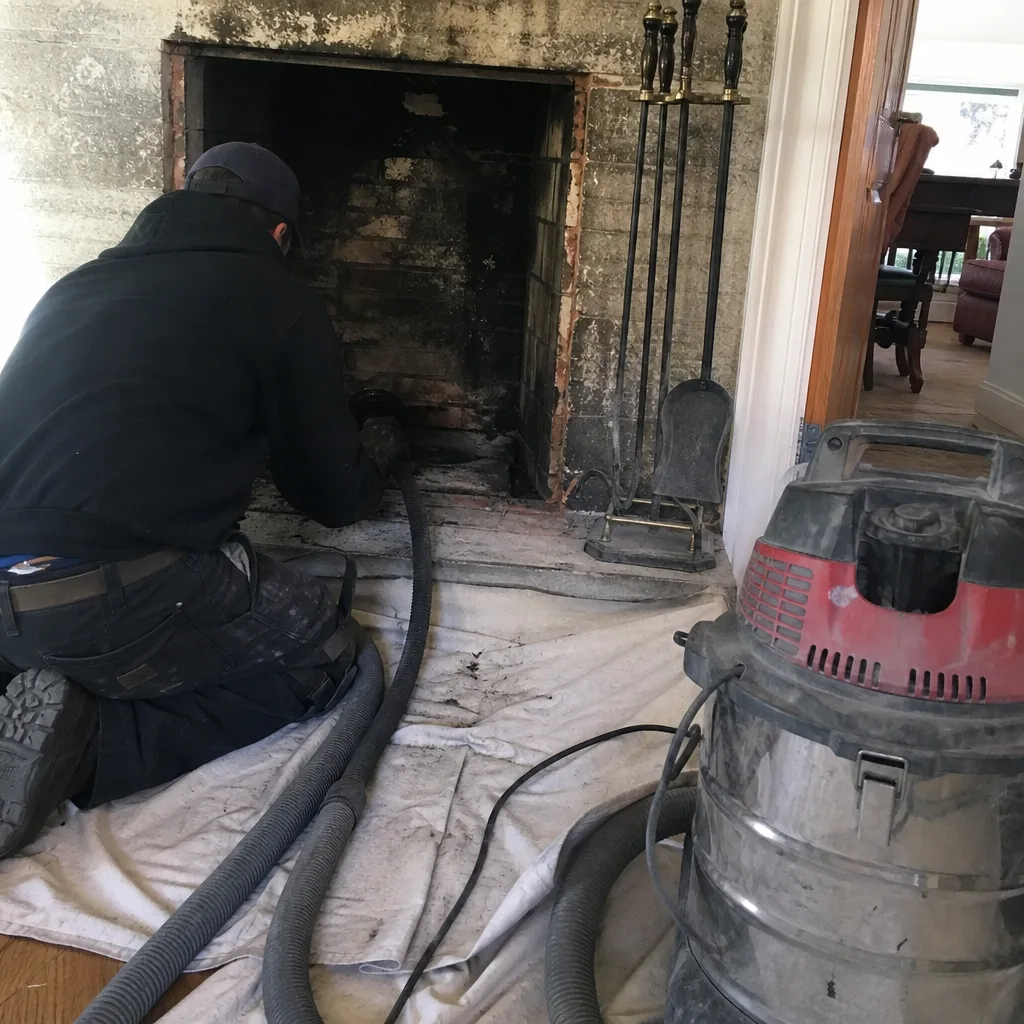
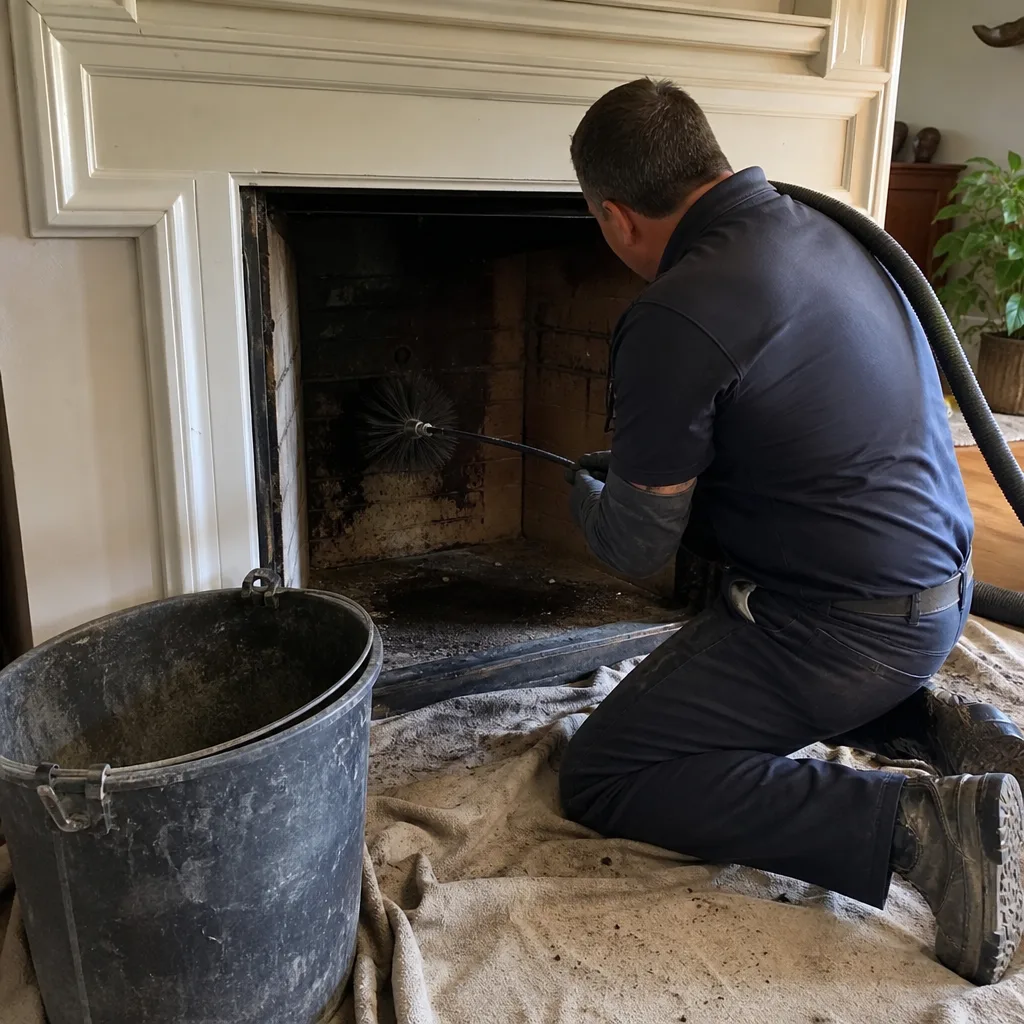
- Drop cloths, HEPA filtration, and firebox protection. We protect your hearth, flooring, and surrounding area before the cleaning starts. Our vacuum systems use HEPA filtration to keep fine particulates out of your living space – a detail that matters in older Lansdale homes where hearths often sit in open-plan living areas or near original hardwood floors.
- Mechanical brushing and debris extraction. For Class I and Class II deposits, rotary chimney brushes sized to your flue liner remove the bulk of the buildup. Debris is captured at the firebox opening and removed – not blown back into the room. For clay tile liners common in Lansdale’s older housing stock, we select brush stiffness carefully to clean effectively without stressing already-aged tile joints.
- Chemical treatment for Class III glazed creosote. Glazed creosote doesn’t respond to brushing. We apply a creosote removal compound – formulated to convert the hardened glaze into a friable ash that can then be brushed out on a follow-up visit. We’ll tell you at the time of the first visit exactly when the second appointment needs to happen and what that will cost. No surprises after the fact.
- Post-cleaning camera pass and written job record. We run the camera a second time after cleaning to document the result. You receive a written job record that includes before-and-after photos, the technician’s classification notes, and any liner or structural findings worth monitoring. That documentation is yours – for your records, your insurer, or the next buyer of your home.
 Before
 After
AfterCreosote Removal Pricing in Lansdale
Creosote removal in Lansdale costs $199-$599 for the majority of jobs. Here’s how that range breaks down.
| Creosote Class | Typical Condition | Estimated Price Range |
|---|---|---|
| Class I | Flaky, dry deposits; light buildup; annual maintenance | $199-$279 |
| Class II | Tar-like or crunchy deposits; moderate buildup; 1-2 missed seasons | $280-$399 |
| Class III | Glazed, hardened deposits; requires chemical treatment and follow-up visit | $400-$599+ |
A few factors push a job toward the higher end of any range:
- Flue height – taller chimneys common in Lansdale’s Victorian and early-20th-century homes require more rod sections and more time.
- Liner material – stainless steel liner systems (including DuraFlex flexible liner) clean somewhat differently than clay tile and may require specific brush profiles.
- System configuration – fireplaces with an offset flue, a smoke chamber that needs hand-scraping, or a tight cleanout access add labor time.
- Extent of glazing – Class III jobs that have been neglected for multiple seasons may require two full chemical treatment cycles before the liner is clean.
The written price you receive at the time of inspection reflects the actual condition of your flue, not a flat rate that gets revised once work starts. If the camera shows something that changes the scope, we stop and talk to you before proceeding. That’s how Clause 1 of the Haven Standard works in practice.
Have a written estimate from another chimney company? Bring it to us. We offer a free second opinion on any written estimate – no obligation, no sales pressure, just an honest read of what the other quote covers and whether the price is fair for Lansdale’s market.
FAQs – Creosote Removal
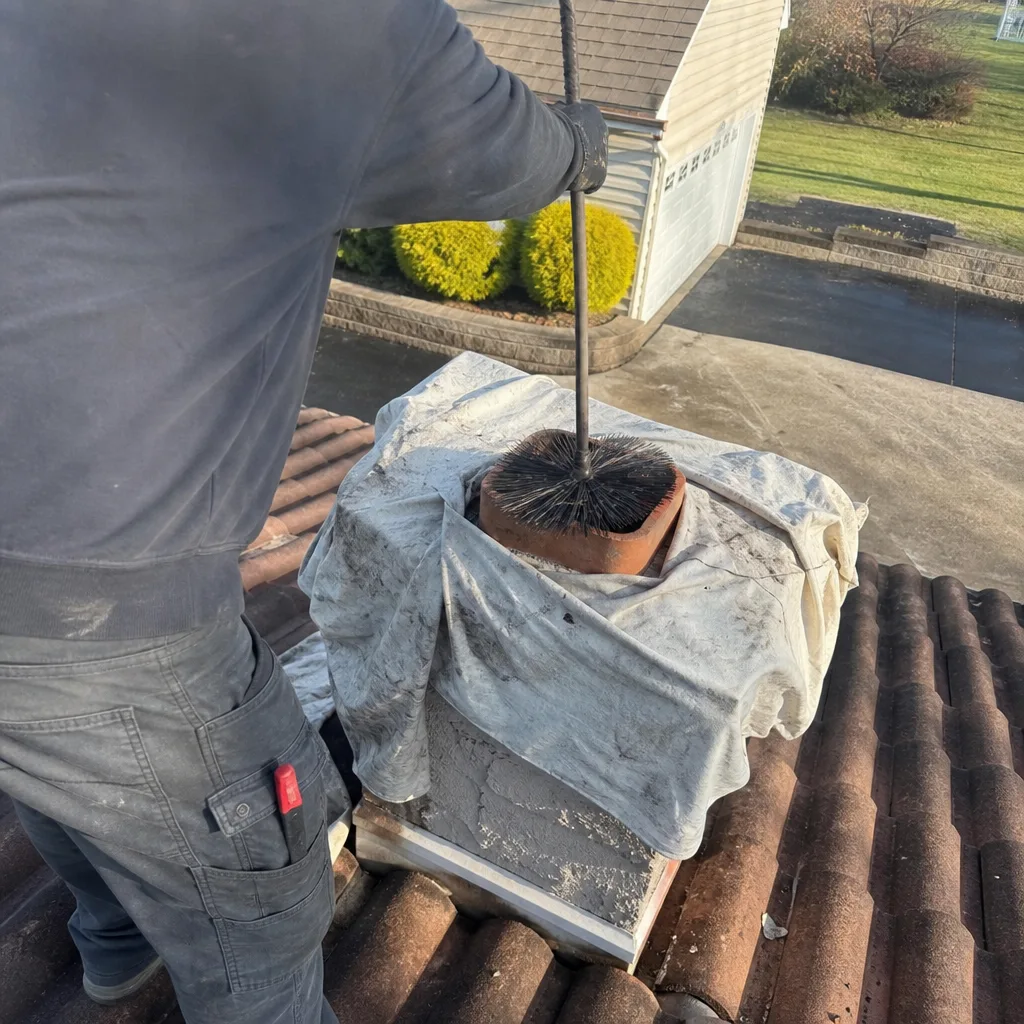
What is creosote, and why does it form in my Lansdale chimney?
Creosote is a byproduct of incomplete wood combustion that condenses on flue liner walls as smoke cools. It forms in three increasingly dangerous classes: Class I is dry and flaky, Class II is tar-like or crunchy, and Class III is a hardened glaze that bonds to the liner surface. In Lansdale, several factors accelerate buildup – burning unseasoned wood (common when homeowners pick up cheap cords in summer), operating fireplaces at low burn temperatures, and older clay tile flue systems that run cool because the liner diameter is oversized for the insert being used. A Level 2 Inspection with camera scan is the only reliable way to know which class is present in your flue. Call (267) 327-4785 to schedule one – the inspection includes a written price before any work starts.
Is creosote removal something I can do myself?
Class I creosote – dry, flaky deposits – can be partially reduced by a homeowner using a correctly sized chimney brush, but this doesn’t substitute for a professional cleaning that captures debris, inspects the liner, and documents the result. Class II and Class III creosote should not be approached as a DIY project. Class III glazed creosote in particular requires chemical treatment agents and a follow-up mechanical removal; working in a confined flue with caustic compounds, without the proper respiratory protection and camera verification afterward, carries real risk. Beyond the chemistry, the more significant danger is not knowing what condition the liner is in. A cracked clay tile or compromised liner joint isn’t visible from below, and brushing a compromised flue can drive debris into gaps that turn into fire pathways. A camera inspection before and after is not optional – it’s the point.
How long does creosote removal take in Lansdale?
A Fireplace Cleaning for Class I or Class II on a standard single-flue fireplace in Lansdale takes approximately 60 to 90 minutes, including the pre-cleaning camera scan, the mechanical sweep, and the post-cleaning inspection. Class III glazed creosote jobs require two visits: the first to apply the chemical treatment compound, the second (typically scheduled 10 to 14 days later) to brush out the converted deposits and run a final camera pass. That second visit typically adds another 45 to 60 minutes. We tell you the full timeline and both visit costs in writing before the first appointment is confirmed.
How often should I have creosote removed from my Lansdale chimney?
NFPA 211 calls for an annual inspection for any chimney connected to an appliance in use, and cleaning whenever deposits reach 1/8 inch or greater. For wood-burning fireplaces used regularly through a Lansdale winter – say, three to five fires per week from October through March – an annual cleaning before each heating season is the practical standard. Homeowners burning seasoned hardwoods (oak, hickory, maple) and keeping fires at a good burn temperature will accumulate less creosote than those burning softwoods or running slow, smoldering fires. If you’re not sure where your flue stands, a camera inspection gives you an exact answer. Call (267) 327-4785 and we’ll set up an appointment that includes a written price before anything starts.
What Sets Level Two Chimney Lansdale Apart on Creosote Work
Since 2009, we’ve inspected and cleaned more than 38,000 chimneys across our service area. Every single one of those jobs came with a written price before work started and a documented photo record at the end. That’s not a recent policy – it’s the foundation the company was built on, formalized as the Haven Standard and practiced on every job in Lansdale and beyond.
Our technicians are background-checked and uniformed. You get a name and a text when they’re on the way. License information is on the page. And the 365-Day Done Right Promise backs every job: if something isn’t right, we make it right – that’s written into every service record, not just said in marketing copy.
We source materials from suppliers including HeatShield and Olympia Chimney, procured through Haven’s buying network. That matters for customers because it keeps our material costs – and therefore your prices – honest. We’re not marking up materials at the counter; the pricing on this page reflects what a well-run independent chimney company in Lansdale’s market actually charges for this work.
Creosote removal is closely connected to the overall condition of your chimney system. If the camera reveals something beyond creosote – a cracked flue tile, a compromised smoke chamber, a crown that’s starting to fail – we note it in writing and explain what it means before recommending any additional work. You can read more about how that inspection connects to the full service on our home page.
Key Takeaways
- Creosote removal in Lansdale runs $199-$599 depending on buildup class; Class III glazed creosote requires two visits and chemical treatment.
- A camera-scan inspection is completed before any cleaning – this classifies the buildup and protects the liner.
- Written price, written scope, and written warranty are delivered before work begins, every time – Haven Standard Clause 1.
- Every job ends with a documented photo record, including before-and-after camera footage – Haven Standard Clause 4.
- All work is backed by the 365-Day Done Right Promise.
- Live phone support is available 24 hours a day at (267) 327-4785.
Schedule Creosote Removal in Lansdale
If you’re in Lansdale and you’ve burned wood this season without a cleaning, or you’ve noticed odors, reduced draft, or visible buildup near the firebox, a camera inspection will give you a clear picture of what’s in the flue and what it will cost to address it. That inspection comes with a written price before any work starts – no estimate that shifts once the tech is already inside your home.
Call (267) 327-4785 to schedule. A live person answers every call, at any hour. If you have a written estimate from another chimney company, bring it – our free second opinion offer stands, no conditions attached.
Written by Corrine Halstead, Owner at Level Two Chimney Lansdale, serving Lansdale.